

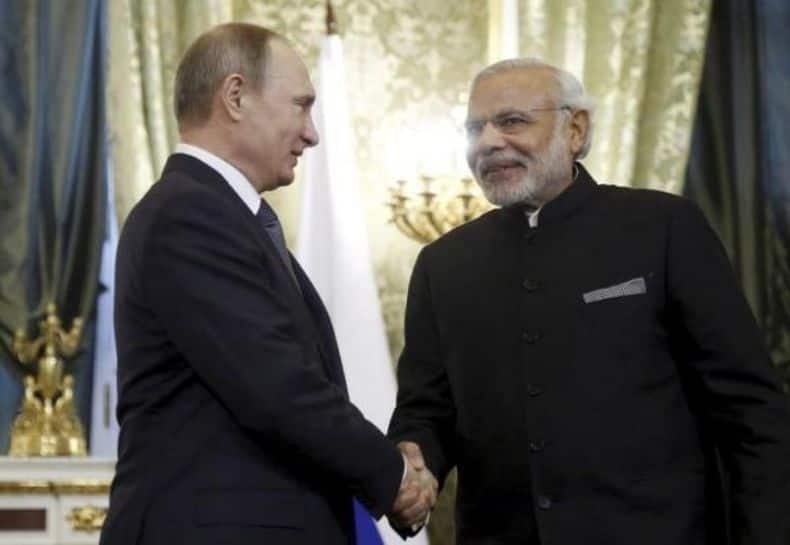
New Delhi: India and Russia share a friendship that stretches back decades, a bond often highlighted around the world. From Bollywood films to defense collaborations, the connection shows up in many places. Since India’s independence, Russia has stood by India during its toughest times. When the United States or Great Britain opposed New Delhi, Moscow was a steadfast ally.
In 1966, the Tashkent Agreement brought peace after conflict. Russia supported India through the wars of 1971 and 1999, standing shoulder to shoulder with the nation. On August 9, 1971, India and the Soviet Union signed the Treaty of Peace, Friendship and Cooperation. This pact was valid for 20 years and laid the foundation for closer ties.
In April 2025, a terrorist attack in Anantnag district of Jammu and Kashmir at Baisaran meadow near Pahalgam claimed 26 lives. India launched Operation Sindoor against Pakistan-backed terrorists in response. Pakistan escalated support for militants but faced heavy losses.
India’s use of powerful BrahMos cruise missiles against Pakistan was made possible through Russian collaboration. Indian defenses destroyed missiles fired by Pakistan before they could enter Indian airspace, thanks to the S-400 missile defense system bought from Russia.
Russia has recently offered India joint production of the fifth-generation stealth fighter Su-57E with full technology transfer, a deal that could strengthen the Indian Air Force.
During the 1971 war between India and Pakistan, which led to the creation of Bangladesh, the United States and Britain sent warships to the Bay of Bengal to support Pakistan. When Russia learned of this, it deployed its naval ships to the same area, effectively blocking American and British forces. This strong stance forced those countries to retreat. The war ended with Pakistan’s surrender of 93,000 soldiers to India, marking a pivotal moment in South Asian history.
In the 1970s, Western countries imposed sanctions on India’s nuclear energy programme. Russia stepped in to support India, providing crucial technology and fuel for nuclear reactors. The Kudankulam Nuclear Power Plant stands as an example of this cooperation.
Russia also signed multiple agreements with India for the peaceful use of nuclear energy, including building additional reactors and supplying low-enriched uranium fuel.
In the 1962 war with China, Moscow supported New Delhi by supplying weapons and military equipment. Though it did not intervene directly, it halted arms sales to China and eased pressure on India. After the conflict, Russia played a key role in mediating the Tashkent Agreement, helping restore diplomatic ties between India and China.
Russia’s help also extends to space. India’s first satellite, Aryabhata, was developed with Soviet assistance and launched in 1975. The satellite’s name honours the famous Indian astronomer Aryabhata.
Russia’s cultural influence touches Indian cinema. The iconic song from Raj Kapoor’s film Awaara mentions a “red cap from Russia”. Known as the budyonovka, this symbol represents the Russian Revolution of 1917.
Prime Minister Narendra Modi referenced this historic “red cap friendship” during his 2024 visit to Russia. The cap symbolises a revolution that changed the course of Russian and world history.
India and Russia have shared many challenges and triumphs. Their partnership has endured wars, sanctions and shifting global dynamics. Today, that bond continues to evolve, promising new chapters in this longstanding friendship.