

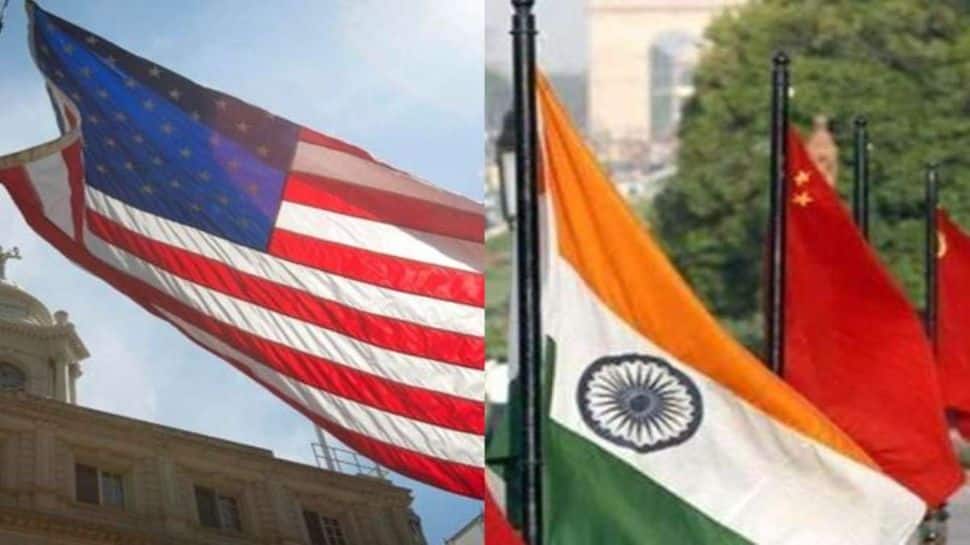
New Delhi: External Affairs Minister S. Jaishankar, in his book titled The India Way: Strategies for an Uncertain World, laid out a nuanced roadmap for India’s global diplomacy in a fractured global order. His vision? Engage with the United States, keep China in check, solidify European alliances, reassure Russia, strengthen bonds with Japan, extend India’s regional influence and breathe new life into traditional partnerships. This multi-aligned strategy sought to place India at the center of a multipolar world, where balance, not allegiance, would drive diplomacy.
Over the past decade, India has attempted to walk that tightrope, partnering with America through the Quadrilateral Security Dialogue or Quad (a strategic forum comprising Australia, India, Japan and the United States) while remaining a key player in Russia- and China-led platforms such as the Shanghai Cooperation Organisation (SCO). But, today, that carefully crafted balance is under visible strain.
A Changing Global Climate
The global diplomatic terrain is shifting, and India finds itself in the eye of the storm. The United States under President Donald Trump is no longer playing cheerleader to India’s rise. Criticism is mounting, especially regarding New Delhi’s continued purchase of discounted Russian oil that is seen in Washington as an endorsement of Moscow in the wake the Ukraine war. Tariff hikes and open censure have followed, complicating India’s ties with a partner it once viewed as a cornerstone of its strategic calculus.
At the same time, Prime Minister Narendra Modi is set to meet Chinese Premier Xi Jinping in Beijing on the sideline of the SCO Summit, a development not viewed as a diplomatic breakthrough, but as a pragmatic overture.
Living In Two Worlds
India is an active member of seemingly incompatible blocs. It supports the U.S.-led Indo-Pacific strategy alongside Japan and Australia via the Quad. Simultaneously, it maintains a place in the SCO, a grouping increasingly at odds with U.S. interests.
India also participates in I2U2, a tech and infrastructure initiative with Israel, the United Arab Emirates (UAE) and the United States while forging trilateral frameworks with France and the UAE.
Analysts say that these cross-cutting engagements are not accidents of policy but a deliberate assertion of strategic autonomy. India believes that fluid affiliations enhance its influence rather than dilute it. Observers call this approach “hedging”, a calculated method to avoid unforeseen risks. Hedging, according to them, may be an imperfect choice, but aligning with any one power bloc is worse.
India, in their view, lacks the confidence, or perhaps the need, to completely anchor itself to any superpower. It prefers gaining strength on its own terms.
But ambition often outpaces capacity. With a $4 trillion economy, India ranks fifth globally but still trails far behind China’s $18 trillion and the U.S.’s $30 trillion GDPs. Its defense sector also remains dependent on imports. Despite efforts toward indigenisation, New Delhi is not among the world’s top arms exporters.
A Reset With China?
Modi’s planned meeting with Xi follows years of frigid Indo-China relations, especially after the Galwan Valley clash in 2020. Since then, the two neighbors have drifted apart diplomatically, despite robust trade links. New Delhi’s trade deficit with Beijing now exceeds $99 billion, more than its entire defense budget, highlighting a deeply skewed relationship.
Recent signals suggest a thaw. China’s ambassador to India recently criticised the U.S.’s protectionist trade policies, calling Washington a “bully”. Chinese Foreign Minister Wang Yi visited New Delhi last week and emphasised partnership over rivalry. Still, the decision to re-engage Beijing is being scrutinised.
Strategic analysts ask: “What other option does India have?” Their view is that managing China will remain India’s central challenge for decades. In his recent column in Hindustan Times, strategic analyst Happymon Jacob argued that Modi’s overtures should be seen within the context of a potential India-China-Russia triangle, a subtle counterbalance to American unpredictability.
However, he warns that without a meaningful reset in India-China ties, Beijing will not be able to capitalise on India’s growing frustration with Washington.
Old Ties, New Tensions
India’s relationship with Russia remains largely intact despite mounting Western pressure. Russian oil is a lifeline for India’s energy security, and recent high-level visits to Moscow reinforce New Delhi’s intent to preserve that channel.
The observers say that this relationship is rooted in caution. India is wary of Russia moving too far into China’s orbit. Trump’s return to political prominence has only added urgency. His uninvited and unwelcome “attempts” to mediate between India and Pakistan left Delhi uneasy. Trade negotiations with America are stalled. Washington’s growing irritation over Russian oil imports has not helped, especially when China buys far more from Moscow without facing equivalent backlash.
Still, history offers perspective. After India’s nuclear tests in 1974 and 1998, U.S. sanctions pushed the relationship to the brink. However, the two countries signed a historic nuclear accord in less than a decade. The observers say that strategic necessity can melt even deep distrust.
Which Way Forward?
The question is no longer whether India’s relationships will improve. The question is: where should India steer them?
India’s commitment to a multipolar world weakens its security. America, though diminished, still outweighs China. And therefore, India should embrace a “special partnership” with Washington to counterbalance Beijing. Failure to choose, the analysts warn, could leave India facing a hostile superpower at its doorstep.
Dr Nirupama Rao, a former Indian ambassador to both China and the United States, sees it differently. She believes India’s size, history and aspirations require flexibility. The world is not polarising into two camps, she argues, it is fragmenting into something more complex. In such a landscape, ambiguity is not weakness; it is sovereignty.
Even amid this fluidity, one truth stands out: India does not feel at home in a world dominated by China and underwritten by Russia. But New Delhi’s choices are limited. Competition with China will persist. Russia can be relied on, up to a point. The U.S. relationship, however strained, will endure beyond Trump. There is too much at stake. Trump’s volatility alone will not derail it.
For now, many analysts agree that India’s best option may be to endure Washington’s rebukes and wait. Strategic patience, as they call it, remains New Delhi’s most potent weapon. Let the storm pass. Partners often return with time.