

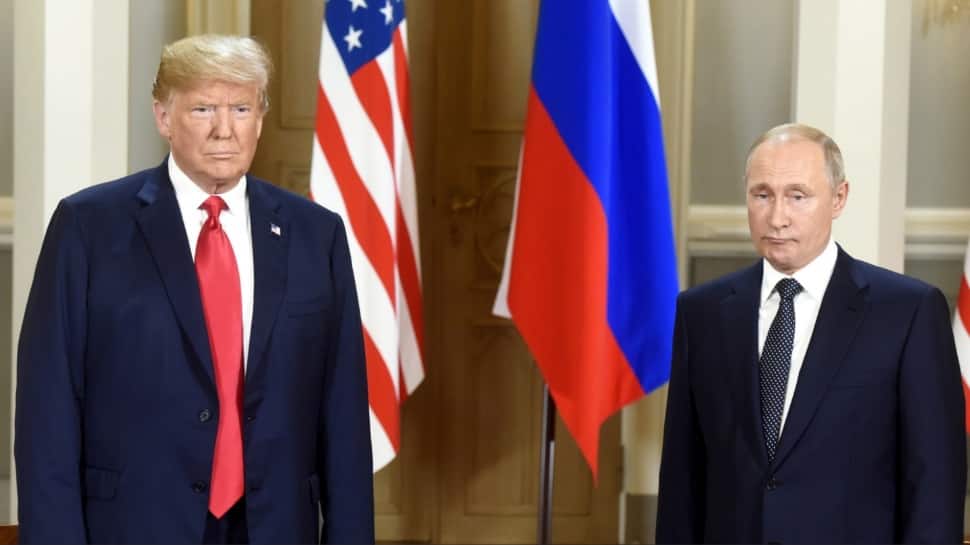
The United States has warned India of potential increases in secondary tariffs if upcoming peace talks between US President Donald Trump and Russian President Vladimir Putin fail to yield a positive outcome. US Treasury Secretary Scott Bessent delivered the warning on Wednesday, linking the decision directly to the high-stakes summit scheduled for Friday in Alaska.
Tariffs Tied To Trump-Putin Summit
In an interview with Bloomberg TV, Bessent stated, “We’ve put secondary tariffs on Indians for buying Russian oil. And I could see, If things don’t go well, then sanctions or secondary tariffs could go up.” This comes after President Trump earlier this month imposed a 25% penalty on India, in addition to existing 25% tariffs, specifically for its continued purchase of oil and weapons from Russia.
The US is actively mediating a ceasefire in the ongoing conflict between Russia and Ukraine. On Wednesday, President Trump himself issued a stark warning of “severe consequences” if Moscow does not agree to a peace deal during the Anchorage summit.
Bessent emphasized the need for European allies to join in sanctions, stating, “President Trump is meeting with President Putin, and the Europeans are in the wings carping about how he should do it, what he should do. The Europeans need to join us in these sanctions. The Europeans need to be willing to put on these secondary sanctions.”
Strained Ties Over Russian Oil Imports
India’s increased imports of cheap Russian crude since the Ukraine war began have significantly strained India-US relations, further complicating ongoing trade talks between Delhi and Washington. Russian oil now accounts for 35% to 40% of India’s oil imports in 2024, a dramatic rise from just 3% in 2021.
Delhi has consistently defended its purchases of Russian oil, arguing that as a major energy importer, it is imperative to buy the cheapest available crude to protect millions of its poor citizens from rising costs.
Trade Talks Under Pressure
Bessent’s recent comments follow his earlier characterization of India as “bit recalcitrant” on trade negotiations during a Tuesday interview with Fox Business. President Trump views his tariffs as part of a broader strategy to boost the US economy and establish fairer global trade practices. He has frequently labeled India a “tariff abuser” and aims to reduce a $45 billion trade deficit with Asia’s third-largest economy.
Trade negotiations between Delhi and Washington have been underway for several months, with US negotiators expected to arrive in India on August 25 to resume talks. However, experts point to India’s reluctance to reduce duties on agriculture and dairy products as a major sticking point in the discussions.
Adding to the pressure, Trump’s new 50% tariff rate on India is slated to take effect on August 27. Some experts suggest this new rate is akin to an embargo on trade between the two countries. If implemented, it would make India the most heavily taxed US trading partner in Asia, potentially severely hampering India’s export-focused industries like textiles and jewelry, and could even drag India’s economic growth down by as much as half a percent.
ALSO READ: SC Directs ECI To Publish List Of 65 Lakh Bihar Voters Deleted From Draft Roll, Cite Reasons