

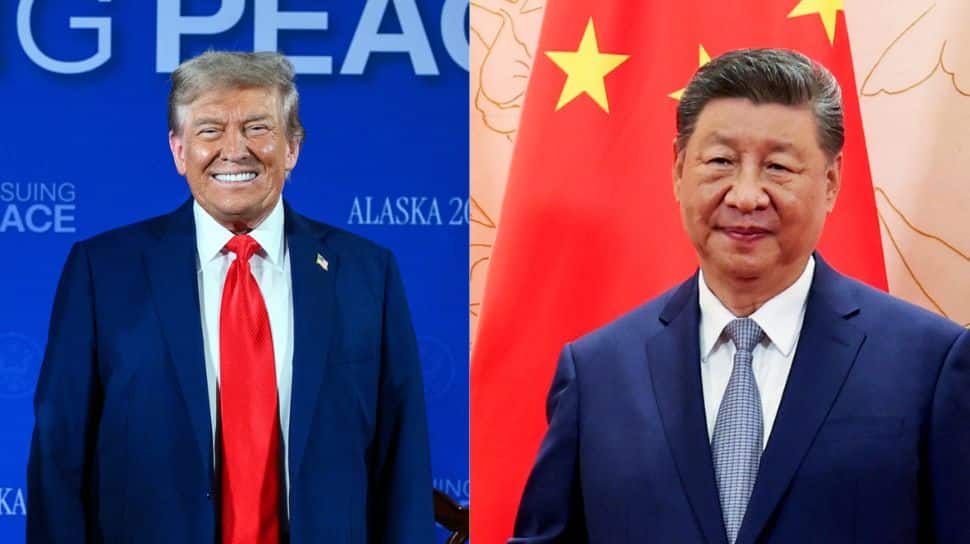
The US-China trade war has just escalated. President Donald Trump on Friday announced that the United States will slap a crushing 100% tariff on all Chinese goods starting November 1, effectively doubling the cost of Chinese imports overnight, in direct retaliation to Beijing’s sweeping new export controls on rare earth elements.
“Starting November 1, 2025, the United States of America will impose a Tariff of 100% on China, over and above any Tariff that they are currently paying,” Trump declared on Truth Social, adding that Washington will also impose export controls on “all critical software and aircraft parts.
What Triggered This Escalation?
China fired the first shot. Earlier this week, Beijing announced unprecedented export restrictions on rare earth elements, the critical minerals that power everything from your iPhone to F-35 fighter jets. China controls roughly 90% of global rare earth processing, giving it enormous leverage over the world’s technology and defense industries.
China expanded its restricted rare earths list from 7 to 12 elements, adding holmium, erbium, thulium, europium, and ytterbium and extended controls to cover not just the materials themselves but the entire production chain: mining technologies, smelting processes, and magnet manufacturing.
Trump called it “an extremely hostile letter to the World” and labeled China’s move “absolutely unheard of in International Trade, and a moral disgrace.
Why Rare Earths Matter
These aren’t just obscure minerals. Rare earth elements are the invisible backbone of modern technology:
Military applications: Precision-guided missiles, jet engines, radar systems, night-vision goggles
Consumer electronics: Smartphones, laptops, flat-screen TVs, headphones
Clean energy: Wind turbines, electric vehicle motors, solar panels
Industrial uses: Medical imaging equipment, lasers, fiber optics
China’s dominance in processing these materials means it can effectively choke global supply chains whenever it chooses. And now, it has.
The 100% Tariff: What It Actually Means
Trump’s counterpunch is equally extreme. A 100% tariff means that Chinese goods currently valued at USD 1,000 would now cost American importers USD 2,000 before reaching store shelves. This applies “over and above any Tariff that they are currently paying,” meaning it stacks on top of existing trade war tariffs.
The immediate impact: higher prices for American consumers on everything from electronics to furniture, clothing to toys. The broader implication: a potential decoupling of the world’s two largest economies.
The Diplomatic Breakdown
Just hours before announcing the tariffs, Trump told reporters there was “no reason to meet” with Chinese President Xi Jinping after Beijing’s “very hostile” export controls. This marks a dramatic reversal from earlier hopes of de-escalation ahead of the APEC summit in South Korea later this month.
China’s Commerce Ministry justified its actions as necessary to “safeguard national security and interests” and prevent materials from being used “directly or indirectly in military and other sensitive fields,” language that mirrors Washington’s own justification for restricting advanced semiconductor exports to China.
The Bigger Picture: Economic Warfare
What we’re witnessing is no longer a trade dispute; it’s economic warfare between superpowers. China’s rare earth restrictions mirror America’s chip export controls, creating parallel technological iron curtains. Both nations are weaponizing their respective dominance: the US in advanced semiconductors, China in critical minerals.
CNN noted that the latest curbs introduce “a new phase in the ongoing US-China trade confrontation,” one where both sides are willing to inflict significant economic pain to maintain strategic advantage.
What Happens On November 1?
Unless China reverses course, which seems unlikely given the strategic nature of its rare earth controls, American businesses and consumers should brace for impact. The double-digit tariffs will ripple through supply chains, potentially triggering:
• Price increases across electronics, automotive, and consumer goods sectors
• Supply chain disruptions as companies scramble for alternative sources
• Potential retaliatory measures from Beijing
• Accelerated efforts to develop rare earth processing outside China
• Further deterioration in US-China diplomatic relations
Trump’s warning was unambiguous: “It is impossible to believe that China would have taken such an action, but they have, and the rest is History.”
That history is being written in real-time, and November 1 marks the next chapter in what increasingly looks like an irreversible economic divorce between Washington and Beijing.