

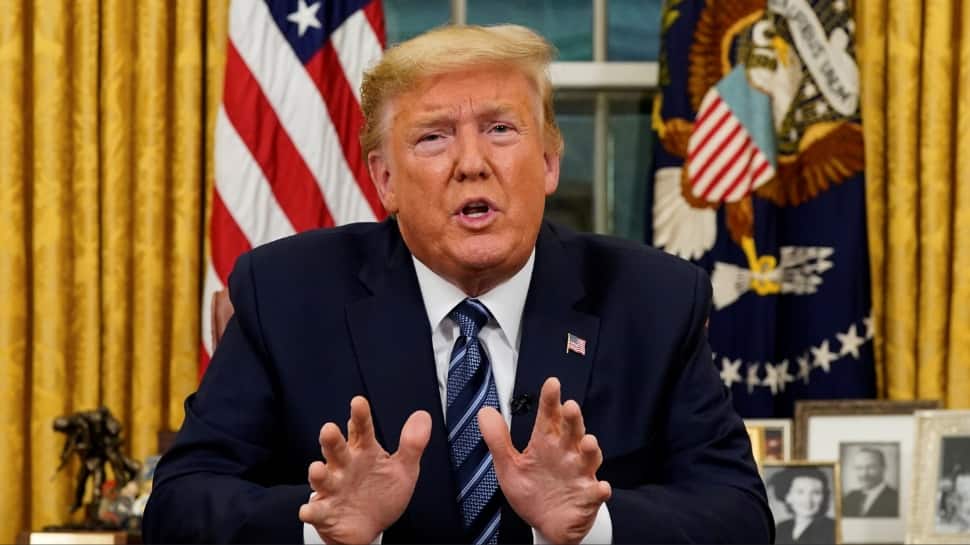
In a dramatic escalation of trade hostilities, US President Donald Trump on 10 October 2025 announced a sweeping new measure: an additional 100% tariff on all Chinese imports. The tariffs, which will come into effect from 1 November, or sooner if Beijing proceeds with what Trump called “aggressive” trade policies, raise the total US tariff on Chinese goods to a staggering 130%.
The announcement, which coincides with new American export controls targeting critical software, marks one of the most aggressive trade actions taken in recent US history.
In a statement posted on Truth Social, Trump described China’s export restrictions as a “hostile act” requiring a strong American response.
“It has just been learned that China has taken an extraordinarily aggressive position on trade… effective November 1, 2025, they plan to impose large-scale export controls on virtually every product they make,” Trump wrote.
The move has deepened already fraught relations between the world’s two largest economies, casting uncertainty over the upcoming Asia-Pacific Economic Cooperation (APEC) Summit in South Korea, which both Trump and Chinese President Xi Jinping are expected to attend.
Just days after a reported phone call between Trump and Xi in which they discussed the progress of a potential trade deal, particularly around the future of TikTok, Trump told reporters there was “no reason to meet” with the Chinese leader at the summit, citing Beijing’s “very hostile” actions. He clarified that no formal cancellation of the meeting had been made.
Immediate Shockwaves Across Global Markets
The new tariffs are expected to send shockwaves through global supply chains, particularly in high-impact sectors such as technology, electric vehicles, and defence. According to a Reuters report, analysts are warning of widespread disruption, while economists caution that the 100% tariff could lead to a spike in global prices, given China’s role as a central supplier of both industrial and consumer goods.
The impact was immediate. US stock indices took a sharp tumble, with The Wall Street Journal reporting that the Dow Jones Industrial Average plunged nearly 900 points. Investors now fear a prolonged trade war and a deeper slowdown in global economic growth.
Who Will Bear Brunt?
Several nations are likely to suffer collateral damage from the US-China trade escalation. Mexico and Canada, two of America’s largest trading partners, could see economic disruption due to their strong manufacturing ties with both nations.
In Asia, economies like South Korea, Japan, and Singapore, with deep integration into global supply chains, are also vulnerable. Industries reliant on Chinese components or US markets, such as electronics, clean energy, and advanced manufacturing, could face major setbacks.
A Silver Lining For Indian Exporters?
Amid the global anxiety, India sees a potential silver lining. The Federation of Indian Export Organisations (FIEO) believes the new tariffs could boost Indian exports to the US, which reached USD 86 billion in the 2024-25 fiscal year.
“We may gain from this escalation,” said FIEO President S C Ralhan in a statement to PTI. “Now this 100 per cent additional tariff on Chinese goods will give us an upper edge,” a textile exporter told the agency.
They added that the shift in demand away from Chinese goods could unlock “huge export opportunities” for Indian manufacturers, particularly in sectors where India is already competitive, such as textiles, pharmaceuticals, and IT services.
As trade tensions escalate, the world watches closely, not just to see how China responds, but also to assess which countries can pivot quickly enough to adapt to a new era of economic realignment.
(With inputs from agencies)