

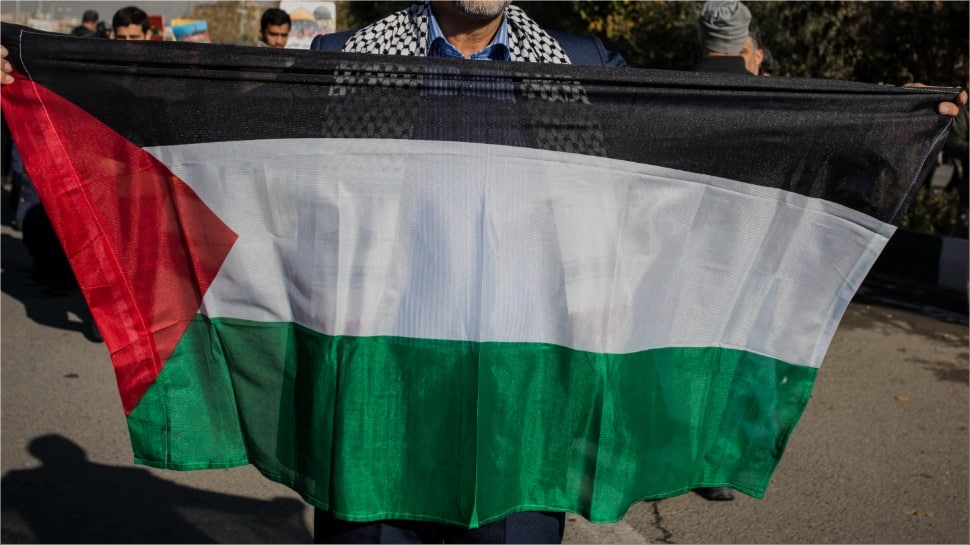
In a landmark foreign policy move, the United Kingdom, Canada, and Australia have formally recognised Palestine as a sovereign state, signalling a significant departure from their longstanding alignment with the United States on the Israeli-Palestinian conflict.
The announcement, made on Sunday, positions the UK alongside more than 140 countries that already recognise Palestinian statehood. It comes ahead of a broader international push expected this week at the United Nations General Assembly in New York, where further recognitions are anticipated.
UK Prime Minister Sir Keir Starmer, in a statement on his official X account, framed the decision as essential to keeping the prospect of peace alive in the Middle East.
“In the face of the growing horror in the Middle East, we are acting to keep alive the possibility of peace and a two-state solution, which means a safe and secure Israel alongside a viable Palestinian state,” he wrote.
“To revive the hope of peace and a two-state solution, I state clearly as prime minister of this great country, that the United Kingdom formally recognises the state of Palestine.”
Today, to revive the hope of peace for the Palestinians and Israelis, and a two state solution, the United Kingdom formally recognises the State of Palestine. pic.twitter.com/yrg6Lywc1s
— Keir Starmer (@Keir_Starmer) September 21, 2025
This announcement follows the UK’s shift in policy in July, when it laid out specific conditions for recognition. These included a ceasefire, increased humanitarian aid into Gaza, a rejection of West Bank annexation, and a commitment to a viable peace process. At the time, Starmer warned that recognition would proceed if Israel failed to meet these benchmarks.
Canada And Australia Follow Suit
Canada became the first G7 nation to extend formal recognition on Sunday, with Prime Minister Mark Carney expressing hope for “a peaceful future for both the State of Palestine and the State of Israel.”
Shortly after, Australian Prime Minister Anthony Albanese confirmed his government’s recognition, calling it part of a joint international initiative to reenergise efforts towards a two-state solution.
“This begins with an immediate ceasefire in Gaza and the release of hostages,” Albanese stated, in a joint declaration with Foreign Minister Penny Wong. The statement also underscored that Hamas would have no role in Palestine’s future governance or security arrangements.
Palestinian And Israeli Reactions
In Ramallah, Palestinian Foreign Minister Varsen Aghabekian Shahin welcomed the wave of recognitions, calling it a “historic moment.”
“It is a move bringing us closer to sovereignty and independence. It might not end the war tomorrow, but it’s a move forward, which we need to build on and amplify,” Shahin said.
Israel, however, has strongly condemned the decisions. Officials described the recognitions as irrelevant and counterproductive, arguing that Palestinian statehood must result from direct negotiations rather than unilateral declarations.
In a sharply worded statement, the Israeli Foreign Ministry labelled the move a “reward” for Hamas, linking it to the militant group’s actions during the 7 October attacks.
“Recognition is nothing but a reward for jihadist Hamas, emboldened by its Muslim Brotherhood affiliate in the UK. Hamas leaders themselves openly admit: this recognition is a direct outcome, the ‘fruit’ of the October 7 massacre,” the statement read.
Recognition is nothing but a reward for jihadist Hamas – emboldened by its Muslim Brotherhood affiliated in the UK.
Hamas leaders themselves openly admit: this recognition is a direct outcome, the “fruit” for the October 7 massacre.
Don’t let Jihadist ideology dictate your… pic.twitter.com/L70nmWm0Xq
— Israel Foreign Ministry (@IsraelMFA) September 21, 2025
US President Donald Trump also voiced his disapproval, noting that the issue had been one of the few points of contention during his recent state visit to the UK.
Responding to criticism, Prime Minister Starmer firmly denied that the move legitimised Hamas in any way.
“We are clear, this solution is not a reward for Hamas, because it means Hamas can have no future, no role in government, no role in security,” he said.
Global Momentum Toward Recognition
France and Saudi Arabia have also played key roles in reinvigorating efforts toward a two-state solution. With growing international consensus, this week’s UN General Assembly could mark a turning point in the diplomatic landscape surrounding the Israel-Palestine conflict.