

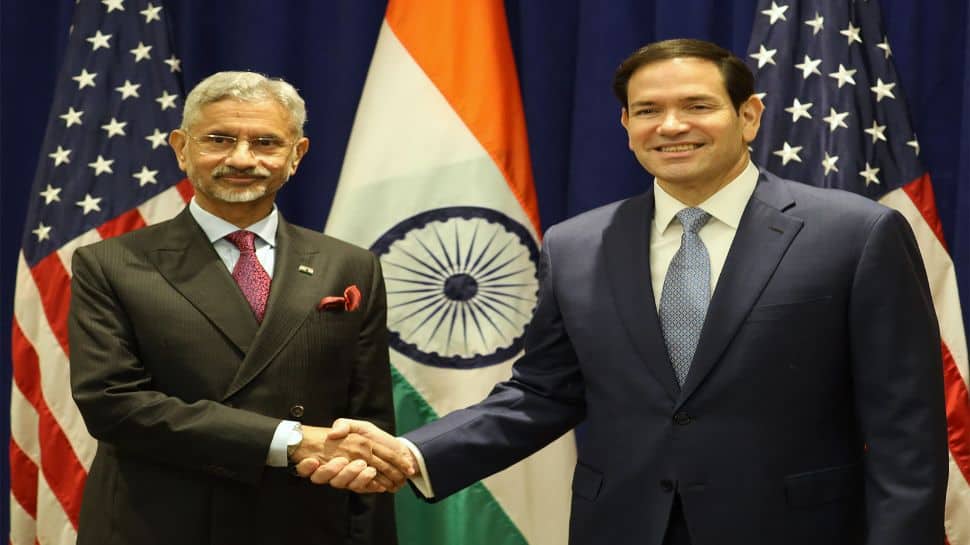
New York: The United States has acknowledged a period of “turbulence” in its relationship with India, citing a pattern of mixed signals from Washington. Senior State Department officials emphasised that, despite these challenges, the partnership with New Delhi remains on a “positive trajectory” and continues to be strategically important for both countries.
The acknowledgment came as news agency ANI questioned how India interprets Washington’s sometimes contradictory messages. While Secretary of State Marco Rubio and other officials emphasise India’s strategic importance, they simultaneously impose trade restrictions and openly criticise New Delhi’s policies.
One senior State Department official explained that President Donald Trump’s frustration with countries is expressed very openly, especially on social media, calling the administration “one of the most transparent in history”. The official added that, despite this direct approach, India continues to be regarded as “a good friend and a partner, really a partner of the future”.
High-Level Engagements Signal Commitment?
The importance of the US-India relationship is reflected in the frequency of high-level engagements. Secretary of State Rubio’s first official act after taking office involved meetings with the Quad nations, comprising the United States, India, Japan and Australia, followed immediately by bilateral talks with Indian External Affairs Minister S. Jaishankar.
Prime Minister Narendra Modi was among the first foreign leaders to visit the White House after Trump’s inauguration, meeting the President within just two weeks in the Oval Office.
The official said that, despite recent frictions, “when you step back from this brief moment and look at the relationship, it is really on a positive trajectory, and it is only expanding”.
Trade Disputes And Energy Talks
Present tensions mainly revolve around trade issues. The Trump administration has imposed additional tariffs on India over various commercial disputes. Washington has also pressed New Delhi to curb its energy imports from Russia, aiming to limit Moscow’s revenues amid the ongoing war in Ukraine.
During a meeting on September 22 at the United Nations General Assembly High-level Week, Jaishankar discussed the Russian oil matter with Secretary Rubio. The State Department official confirmed that the issue was raised, adding, “The Russian oil issue was absolutely discussed as it is discussed in every single engagement we have. He has been clear with our European partners. He has been clear with India.”
While no specific commitments emerged from these talks, the Trump administration said the matter will continue to be addressed in future diplomatic exchanges.
Personal Diplomacy Remains Strong
The personal rapport between Trump and Modi continues to be a cornerstone of the relationship. Officials described a recent phone conversation between the two leaders on Modi’s 75th birthday as “incredibly positive”.
The administration is also preparing to nominate Sergio Gor, a close aide to Trump, as ambassador to New Delhi. The nomination highlights the priority the White House places on the bilateral relationship.
Officials indicated that further meetings between Trump and Modi are likely. “I am sure you will see the two meet. They have a very, very positive relationship,” he said.
Plans are underway for a Quad Summit, involving the United States, India, Japan and Australia, potentially later this year or in early 2026.
The present diplomatic tensions reflect the nuanced nature of US-India relations, where strategic goals coexist with specific policy disagreements. While Trump’s direct communication style has introduced some friction, the frequency of high-level meetings and the priority given to India in the administration’s calendar suggest that Washington remains committed to strengthening and expanding the partnership.
Officials conclude that the United States views the relationship with India as too vital to be undermined by temporary disputes, keeping the long-term trajectory firmly in positive territory.