

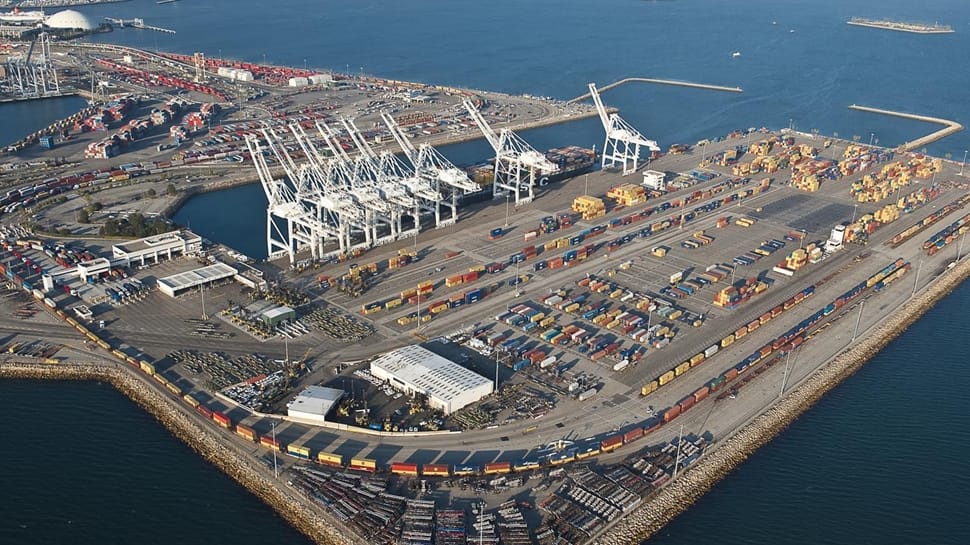
US Sanctions On Chabahar: Is the United States looking for one or another way to trouble India? Washington’s latest moves indicate that the Trump Administration is looking for ways to pressure India over New Delhi’s ties with Russia, China, and Iran. In a fresh move that has caused concerns in New Delhi, the United States has dealt a major blow to India’s long-standing strategic ambitions in Iran by revoking the sanctions waiver that allowed operations at the Chabahar Port. The move effectively blocks New Delhi’s ability to pursue one of its most significant connectivity projects in the region without the risk of US penalties.
What Waiver Meant
The sanctions waiver, first granted in 2018 under the Iran Freedom and Counter-Proliferation Act (IFCA), was a special exemption that allowed India and other countries to continue developing the Chabahar Port. Washington had justified the waiver at the time by citing the port’s role in facilitating humanitarian aid and reconstruction in Afghanistan, especially at a time when NATO forces were winding down.
On September 18, 2025, the US State Department announced that the waiver had been revoked in line with Washington’s continued efforts to put ‘maximum pressure’ on Tehran.
“Once the revocation is effective, persons who operate the Chabahar Port or engage in other activities described in IFCA may expose themselves to sanctions,” the department said, warning companies, investors, and governments of punitive measures.
Also Read: Torn Away From Families, Over 29,000 Afghan Children Deported From Iran And Pakistan
Why The US Pulled the Plug
The waiver’s revocation is part of Washington’s broader strategy to isolate Iran diplomatically and economically. The US accused Iran of destabilising activities in West Asia, including support for proxy groups and illicit financial networks. Alongside the Chabahar decision, the State Department also sanctioned multiple entities in Hong Kong and the United Arab Emirates, accusing them of helping Tehran bypass restrictions.
This marks a significant policy shift: from tolerating India’s limited engagement with Iran for Afghanistan’s sake, to a hardline stance that leaves little room for exceptions.
India’s Stake in Chabahar
For India, Chabahar has been more than just a port. It has been a strategic lifeline, providing a route to Afghanistan and Central Asia while bypassing Pakistan, which has consistently blocked Indian overland access.
In May 2024, India signed a 10-year agreement to operate a terminal at Chabahar—the first time it assumed management of an overseas port.
The project is linked to the International North-South Transport Corridor (INSTC), a multimodal trade route intended to connect India with Central Asia, Russia, and Europe.
The port has already been used for humanitarian shipments, such as 20,000 tonnes of wheat aid to Afghanistan in 2023, and supplies of eco-friendly pesticides to Iran in 2021.
India’s Ministry of External Affairs had earmarked Rs 100 crore for Chabahar in the 2024–25 budget, underlining New Delhi’s seriousness in developing the project.
Also Read: Israel Foils Iranian-Backed Cells In Syria, Eliminates Hezbollah-Linked Commander
Why Chabahar Matters Strategically
Chabahar, located in Iran’s Sistan-Balochistan province on the Gulf of Oman, is just 170 km west of Pakistan’s Chinese-backed Gwadar Port, part of the China–Pakistan Economic Corridor (CPEC). The port has long been seen as India’s answer to China’s expanding maritime footprint in the Arabian Sea.
For New Delhi, access to Chabahar was meant to:
* Expand trade with Afghanistan without depending on Pakistan’s routes.
* Strengthen its role in Central Asian energy markets.
* Counterbalance China’s presence in Gwadar and the wider Indian Ocean region.
The Road Ahead for India
The US decision puts India in a difficult position. New Delhi’s partnership with Washington has grown dramatically in recent years—especially in defense and technology—but the loss of Chabahar could weaken India’s connectivity ambitions in Eurasia.
India now faces a tough balancing act:
* Defying US sanctions risks jeopardising its broader strategic partnership with Washington.
* Backing off from Chabahar undermines two decades of investment and planning, while ceding ground to China and Pakistan.
For now, Indian officials are expected to engage Washington diplomatically, hoping for carve-outs similar to those that once existed for humanitarian shipments. But with the Biden administration doubling down on Iran sanctions, the future of India’s “Iran dream” remains uncertain.