

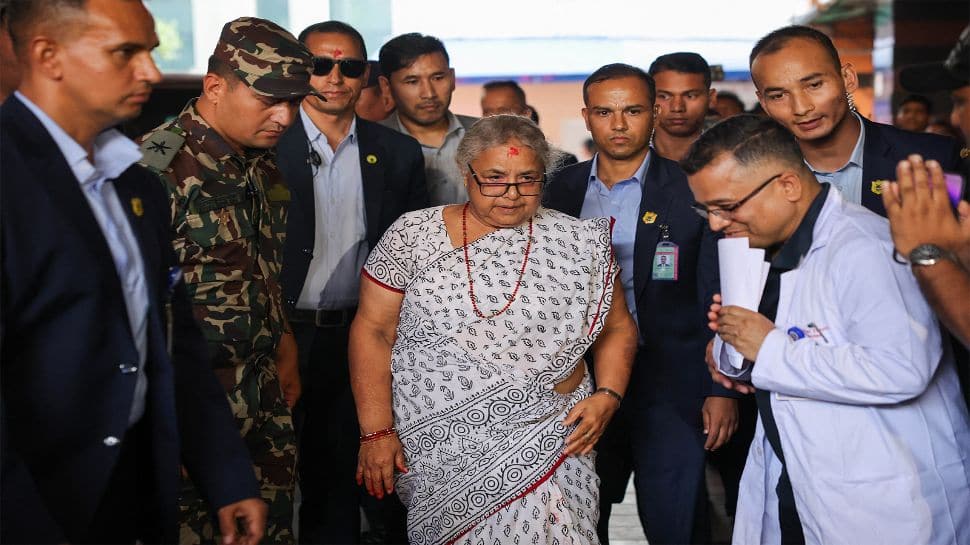
Kathmandu: Even after the fall of the KP Oli government and the installation of an interim administration under Sushila Karki, a section of Nepal’s Gen-Z youth continues to express unease. Their discontent is directed at the induction of three ministers into the new cabinet.
On the evening of the appointments, hundreds of demonstrators assembled outside Karki’s official residence. They demanded her resignation and raised slogans against the cabinet expansion. Their anger was centred on the claim that ministers had been selected without consulting the movement’s leadership or the wider public.
The protest was led by Sudhan Gurung, a 36-year-old activist who became the most prominent face of the Gen-Z uprising. Standing before the crowd, he issued a sharp warning, “If we take to the streets again, no one will be able to stop us. The chair we placed her on can be removed just as quickly.”
He also accused senior advocate Om Prakash Aryal of interfering in government decisions and of nominating himself as the home minister. Aryal is seen as a close associate of Kathmandu Mayor Balen Shah.
Aryal has been appointed minister for home and law, Rameshwor Khanal has been made the finance minister and Kulman Ghising has been given charge of energy and irrigation along with urban development and infrastructure.
The discontent voiced by Gurung and his supporters reflects ongoing tension between the interim administration and the younger generation that played a central role in mobilising street protests. The leadership of the Gen-Z movement has stated repeatedly that they will not take part in the government but will continue to monitor its actions closely.
Who Is Sudhan Gurung?
Gurung mobilised the Gen-Z for the September 8 protest in Kathmandu. He is the founder of Hami Nepal, an NGO formed in 2015 to provide relief during earthquakes, floods and other emergencies. The group is known for its rescue work and distribution of food and water during crises.
Hami Nepal has also taken up issues related to students and migrant Nepali citizens. Earlier this year, the organisation campaigned after the suicide of a Nepali student in Bhubaneswar, India, by amplifying her story across social media.
The NGO rarely engaged in political controversies in the past. Its social media feeds usually highlight humanitarian work. The sudden leap into Kathmandu’s political protests is seen as a major shift for Gurung.
This is not his first brush with controversy. He earlier questioned alleged irregularities in teacher recruitment, accusing officials of favouring money and political pressure over merit. Soon after, he survived an attack by unidentified assailants.
Growing Turmoil Inside Political Parties
Nepal’s politics has entered another turbulent phase. The appointment of interim PM Karki, followed by the dissolution of Parliament, has triggered discontent within major parties.
Eight political parties, including the Nepali Congress, the CPN-UML and the Maoist Centre, have called the dissolution unconstitutional.
Inside the Nepali Congress, Gagan Thapa and Bishwa Prakash Sharma are pressing party president Sher Bahadur Deuba to resign. In the UML, leaders Shankar Paudel and Yogesh Bhattarai are pushing chairman KP Oli for reforms. Maoist Centre leader Janardan Sharma has urged Pushpa Kamal Dahal ‘Prachanda’ to hand over leadership to a younger generation.
Political analysts say that party leaders are avoiding direct confrontation with PM Karki, but pressure from both the streets and their own cadres has forced them into defensive positions.
A Historic Appointment For Nepal
For the first time in the country’s history, a woman has been appointed the attorney general apart from the interim head of the government. Senior advocate Savita Bhandari Baral has taken charge after the resignation of Ramesh Badal. The appointment came on Karki’s recommendation and was approved by President Ram Chandra Paudel.
After assuming office on September 12, Karki addressed the Gen-Z and said those who died during the protests would be honoured as martyrs. Families of the victims will receive compensation of 10 lakh Nepali rupees each.
The protests have claimed 72 lives so far, including that of an Indian woman.
Karki promised to fight corruption and described the 27-hour-long continuous demonstration as unprecedented in Nepal’s history. Her interim government has been tasked with holding general elections on March 5, 2026.
Streets Calm But Restrictions Remain
After days of violence, curfew has been lifted from Kathmandu. Public transport has resumed and cross-border movement between India and Nepal has reopened.
However, restrictions remain in six parts of the capital. Public gatherings of more than five people are banned. Hunger strikes, rallies, sit-ins and protests remain prohibited for two months under government orders.