

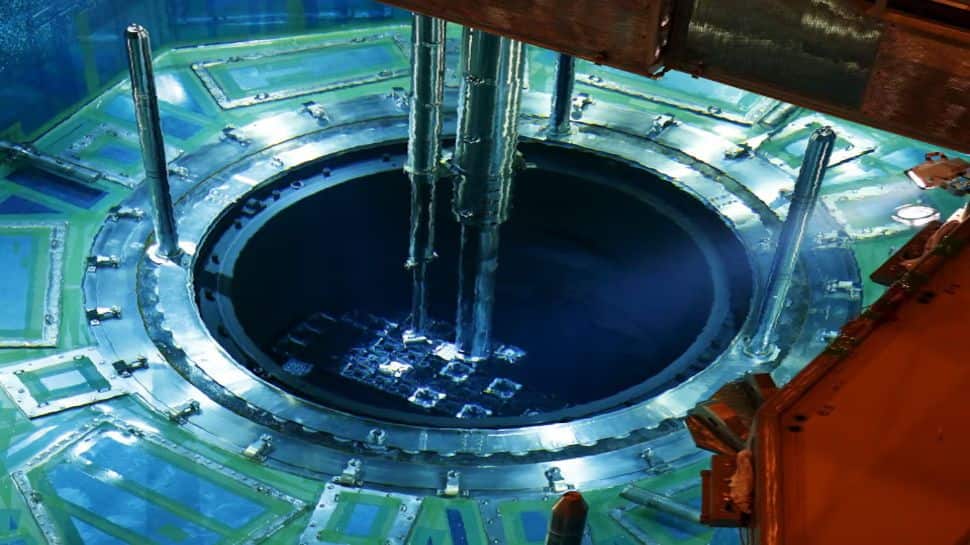
Moscow: The global energy landscape is changing. Artificial intelligence, machine learning and industrial growth are driving massive electricity demands. Small Modular Reactors (SMRs) are compact nuclear power units designed to meet this demand efficiently. SMRs typically generate under 300 megawatts of electricity, making them suitable for diverse applications.
India is developing the Bharat SMR, China operates the world’s largest programme and Russia is actively building and exporting these compact nuclear units.
Often fitting into just 15-17 hectares, SMRs are space-efficient. Unlike conventional nuclear plants, these reactors integrate pumps, steam generators and nuclear fuel into a single unit. Each unit can deliver around 55 megawatts of electricity and up to 200 megawatts of thermal energy.
Uranium fuel is enriched up to 20%, remaining within safe operational limits. Their modular design allows them to be factory-assembled and transported easily, even by train, making them ideal for remote areas, islands and locations currently relying on diesel power.
The global SMR race is heating up. Russia is building a land-based SMR in the Yakutia region and has agreements to supply units to Uzbekistan. China has commissioned a 100 MW land-based test SMR. Many countries, including France and the United States, are developing their own SMRs, but Moscow has decades of experience, having deployed small reactors on icebreakers since the 1950s.
India is accelerating its nuclear ambitions with a target of 100 gigawatts of nuclear power by 2070. Bharat SMR is being developed by the Bhabha Atomic Research Centre (BARC) in Mumbai. Localisation and supply chain development are priorities, and private sector participation is expected to expand production and green energy capacity.
Safety and sustainability define SMRs. These reactors combine passive and active safety systems, are accident-tolerant and can supply energy for five to six years without refuelling. Their faster deployment, lower capital cost and flexible application make them ideal for powering AI-driven data centres, industrial zones and island communities.
As India works toward its 100 GW nuclear target, SMRs could become a key technology, complementing large-scale plants and floating reactors while supporting sustainable industrial growth.