

Washington: US President Donald Trump is mulling over renaming the Department of Defense back to its original title: the ‘Department of War’. The old name, he argues, “sounds stronger” and carries the weight of America’s past military triumphs.
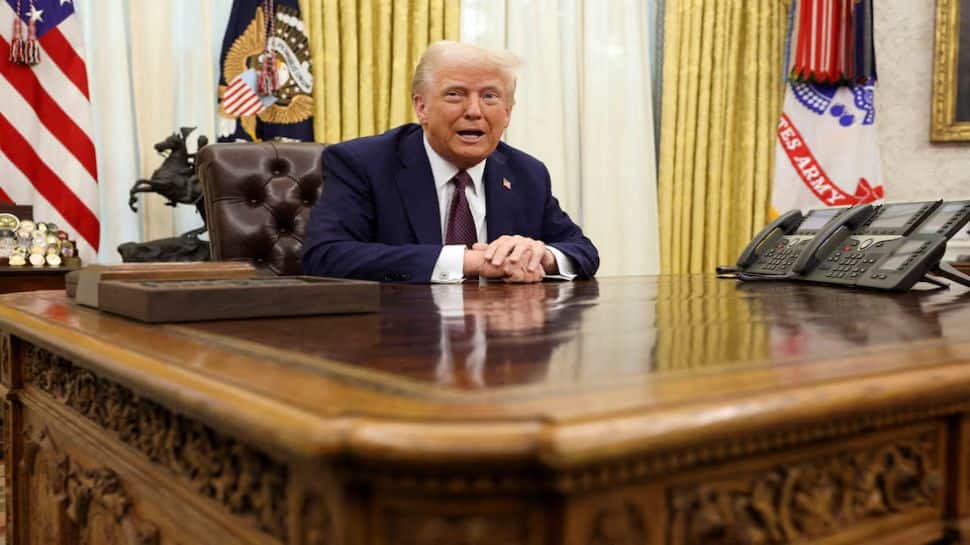
Speaking from the Oval Office, he said, “The Department of Defence…It did not sound good to me…What are we defence? Why are we defence? It used to be called the Department of War and it had a stronger sound. We won World War I, World War II.”
He emphasised a desire for a more assertive stance, saying, “I don’t want to be defence only…we want offence too…We want to change it back to what it was, where we used to win wars all the time.”
ALSO READ: Phone Calls Ignored: Did PM Modi Snub US President Trump As India-US Tariff War Heats Up?
Trump dismissed any obstacles from the Congress regarding this proposed name change. “We are just going to do it…I am sure Congress will go along if we need that. I don’t think we even need that.”
This is not the first time Trump has brought up the idea. At the NATO summit in June, he hinted at restoring the original name, even calling Pate Hegseth his “Secretary of War”. He pointed to the historical building near the White House as a reminder of the former title.
“If you look at the old building next to the White House, you can see where it used to be the Secretary of War,” he said on June 26.
He added, “Then we became politically correct, and they called it Secretary of Defence. Maybe we will have to start thinking about changing it.”
The Department of War was one of three original departments created by the first U.S. Congress in 1789. Over time, it evolved. The Department of the Navy was established separately in 1798. After the World War II, the National Security Act of 1947 combined the Army, Navy and Air Force under the National Military Establishment. This entity was renamed the Department of Defense in 1949 to reflect civilian control over the military.
Trump’s push to return to the older name reflects his preference for a stronger and more offensive military posture, linking it to America’s historic victories.