

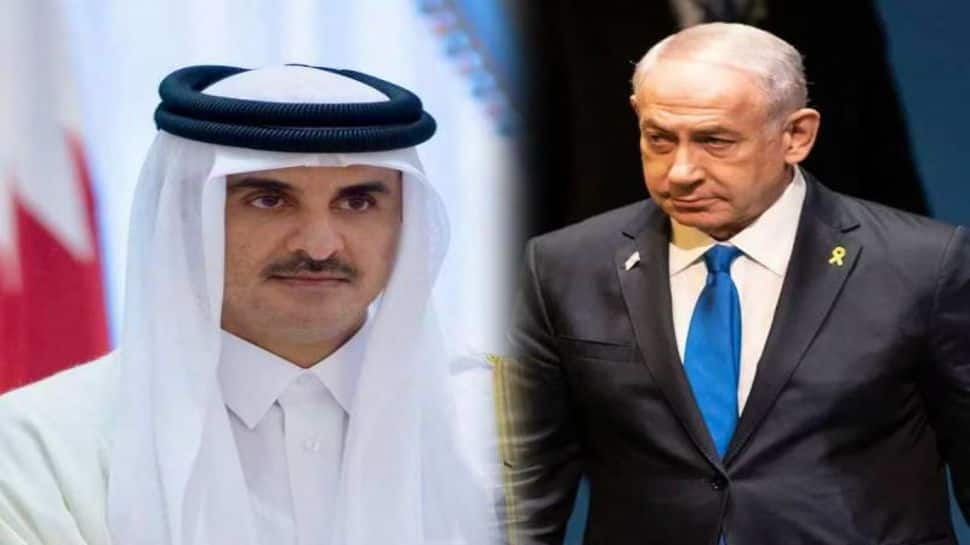
Doha: On September 9, 2025, Israel carried out an airstrike on Hamas leaders in Qatar’s capital, Doha. Questions immediately arose about Qatar’s military capability. Could it retaliate against a state like Israel?
The 2025 Global Firepower Index (GFP) helps compare the two nations’ armed forces and assess Qatar’s ability to respond.
Qatar vs Israel: Military Strength Comparison
1. Global Firepower Index 2025
- Israel: It is ranked 15th among 145 countries, with a power index score of 0.2661 (lower score = stronger military). Israel is one of the most powerful militaries in the Middle East.
- Qatar: It is ranked 62nd, with a score of 1.0786. Qatar’s strength relies heavily on wealth and modern equipment but lags far behind Israel.
2. Manpower
- Israel: It has a population 9.3 million. Of the population, 6,30,000 are military personnel (170,000 active, 465,000 reserve). The country has mandatory military service for men (36 months) and women (21 months). Around 60,000 join annually. Its defence force is highly trained, disciplined and battle-hardened.
- Qatar: It has a population 2.7 million, which include 66,550 personnel (11,800 active). Qatar has mandatory national service of four months for men introduced in 2018. Around 20,000 people join the country’s military annually. It is small and professional force, which is largely defensive.
Comparison: Israel enjoys a vast and experienced force. Mandatory service ensures continuous human resource advantage. Qatar’s manpower is limited.
3. Air Power
- Israel: It has 612 aircraft (241 fighter jets, 48 attack helicopters, 146 trainers) and is equipped with F-35 stealth jets, F-15s, F-16s and Apache helicopters. It is renowned for precision strikes and long-range capabilities.
- Qatar: It has 149 aircraft (36 fighters, 24 attack helicopters) and is equipped with Rafale, Eurofighter Typhoon, F-15QA and Apaches. The country has 2,500 Hellfire missiles. Future F-35 acquisition possible but unconfirmed.
Comparison: Israel’s air force is four times larger and more experienced. Qatar’s air fleet is modern but smaller and limited in operational reach.
4. Ground Forces
- Israel: It has 1,370 tanks (Merkava IV), 43,000 armored vehicles and 650 artillery units. Israel has the region’s most powerful and technologically advanced army.
- Qatar: It has 62 Leclerc tanks, 2,000 armored vehicles and 89 artillery units. The nation’s armament is defensive in size and orientation.
Comparison: Israel’s ground force is far larger and battle-tested. Qatar’s army remains primarily defensive.
5. Naval Power
- Israel: It has 67 vessels (7 corvettes, 5 submarines, 45 patrol boats). Its Dolphin-class submarines can carry nuclear missiles. It is skilled in coastal defense and missile attacks.
- Qatar: It has 86 vessels (7 corvettes, 79 patrol boats, no submarines). It is focussed on coastal defense; modernised with Italian and Turkish ships.
Comparison: Qatar has more ships numerically, but Israel’s nuclear-capable submarines and missile technology outweigh the advantage.
6. Missiles and Weapons
- Israel: It has estimated 80-200 nuclear warheads, which include Jericho III long-range ballistic missiles, Delilah cruise missiles, Iron Dome and David’s Sling. It is advanced technology capable of long-range precision strikes.
- Qatar: It has Hellfire missiles, Turkish Bayraktar drones and short-range missiles. The country does not have nuclear or long-range ballistic capability.
Comparison: Israel dominates in strategic weapons and missile technology. Qatar’s arsenal is limited and defensive.
7. War Experience and Strategy
- Israel: It has fought multiple wars since 1948, launched extensive counterterrorism operations and has regional conflict experience. Operations against Hamas (ongoing since 2023) and Hezbollah, Houthis and Iran (2024) highlight its operational expertise.
- Qatar: It has not fought any major war; has experience mostly limited to peacekeeping and GCC alliances.
Comparison: Israel’s military is battle-hardened; Qatar has limited and defensive.
Can Qatar Respond To Israeli Strikes?
The September 9 strike in Doha involved 15 Israeli fighter jets and 10 munitions. Six people were killed, including a Qatari security officer. Doha condemned the attack as a violation of international law and reserved the right to respond.
Qatar’s Response Capabilities
- Limited military strength: Modern equipment exists, but the small and inexperienced force cannot challenge Israel directly. No long-range missiles or nuclear weapons.
- US support: Al Udeid Air Base hosts 10,000 US troops. It is key to Qatar’s defense, though the United States cannot act without Qatari consent.
- Diplomatic leverage: Qatar wields soft power through media (Al Jazeera) and international mediation.
- Regional alliances: GCC partners include Saudi Arabia, the UAE and Turkey. Military support is uncertain, but diplomatic backing is possible.
Challenges
Israel’s military superiority with advanced air power, missile defenses and nuclear capability.
US ‘neutrality’: President Trump condemned the attack but refused military intervention.
Limited retaliatory options: Qatar cannot strike Israel directly. Its options remain legal action, diplomatic pressure and limited regional support.
Qatar’s strength lies in diplomacy, economics and media influence. Militarily, it cannot match Israel’s advanced capabilities. Its best tools remain international law, strategic partnerships and mediation, rather than direct retaliation.