

Where Did Oli Flee? Gen Z’s Uprising Forces Nepal PM to Resign And Vanish
Until this morning, KP Sharma Oli was Nepal’s Prime Minister — considered one of the most powerful leaders the country had seen. But in a dramatic turn of events, he has now emerged as the chief villain in the eyes of Nepal’s Gen Z-led anti-corruption movement.
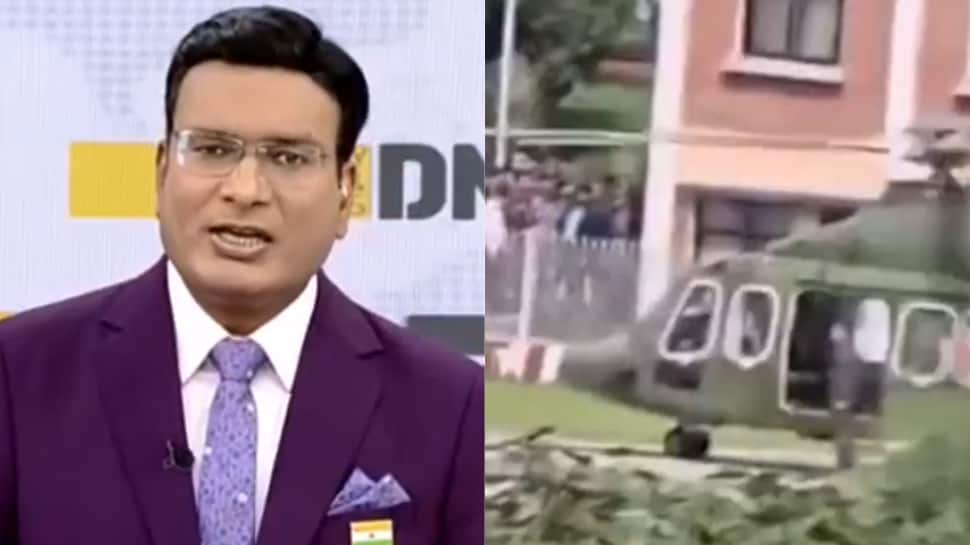
Oli’s downfall, rooted in allegations of corruption and authoritarianism, culminated today in a shocking resignation and his disappearance from public view. In today’s DNA Episode, Rahul Sinha, Managing Editor of Zee News, analysed the resignation and whereabouts of former Nepal PM Oli:
Watch DNA Episode Here:
#DNAWithRahulSinha | DNA का ‘नेपाल विशेषांक’
पीएम पद से इस्तीफा.. ओली का क्या हुआ ? ओली विदेश भाग गए या नेपाल में ही छिपे?#DNA #Nepal #NepalProtest #KPSharmaOli #NepalGenZProtest | @RahulSinhaTV pic.twitter.com/P7K2qv25ox
— Zee News (@ZeeNews) September 9, 2025
Resignation After Violent Unrest
Oli submitted his resignation this afternoon, which was immediately accepted by the President. His fourth term as Prime Minister came to an abrupt end after just 1 year and 2 months.
His decision came hours after protestors, furious over recent events, set fire to two of his residences — first, his private home, and then the official Prime Minister’s residence in Baluwatar.
As the situation spiraled out of control, Oli reportedly called Chief of Army Staff Ashok Raj Sigdel, urging him to deploy the army to restore order. However, Sigdel is said to have made it clear that peace could only return if Oli stepped down.
Evacuated by Helicopter, Location Unknown
After resigning, Oli requested the army chief to ensure his safe evacuation. A military helicopter was deployed, and he was flown to an undisclosed location. Sources claim Oli may be planning to leave for Dubai under the pretext of medical treatment, with a Himalaya Airlines aircraft reportedly on standby.
From Power to Panic — In Just 24 Hours
Just yesterday, Oli was at the peak of political power. Today, he is on the run — a dramatic fall from grace that political analysts say is largely self-inflicted.
Oli’s administration was accused of displaying authoritarian tendencies. For instance, he imposed a blanket ban on social media, citing a Supreme Court directive. However, the court had only recommended regulations and oversight — not an outright ban.
Despite massive youth participation in recent protests, Oli underestimated the movement, believing that forceful suppression — including the use of live ammunition on students — would deter the demonstrators. Instead, it only inflamed public anger.
When nationwide outrage erupted over the killings, Oli attempted to deflect criticism by forcing the resignation of Home Minister Ramesh Lekhak. Late Monday, the government lifted the social media ban, allowing platforms like Facebook, YouTube, and X to resume operations.
However, that same night, Oli released a statement blaming “foreign infiltrators” for the violence — a move that backfired, further fueling the protests.
Oli, the chairman of the Communist Party of Nepal (UML), first became Prime Minister in October 2015. His early years in office were marked by a shift towards China and increasing tension with India.
He signed a transit and transport agreement with China that broke India’s monopoly on Nepal’s foreign trade. In May 2020, his government issued a controversial political map claiming Lipulekh, Kalapani, and Limpiyadhura — areas currently under Indian control — as part of Nepal, sparking diplomatic conflict.
A Close China Ally
Oli’s pro-China stance was evident throughout his tenure. During internal political crises, Chinese officials — including then-ambassador Hou Yanqi — actively intervened to keep his government afloat. Under Oli, China’s influence in Nepal grew significantly.
Even during the recent uprising, Oli’s government banned U.S.-based social media platforms but did not ban Chinese-owned TikTok, raising questions about selective enforcement.
Oli also backed China’s Belt and Road Initiative and signed several bilateral agreements during his term.
Tense Ties with India
Despite India’s efforts to maintain a working relationship, Oli consistently took a hostile approach. Just weeks ago, he opposed an India-China trade agreement via the Lipulekh Pass, demanding its cancellation.
Oli was scheduled to visit India on September 16, but the Gen Z-led revolt upended those plans — forcing him to flee his own country.