

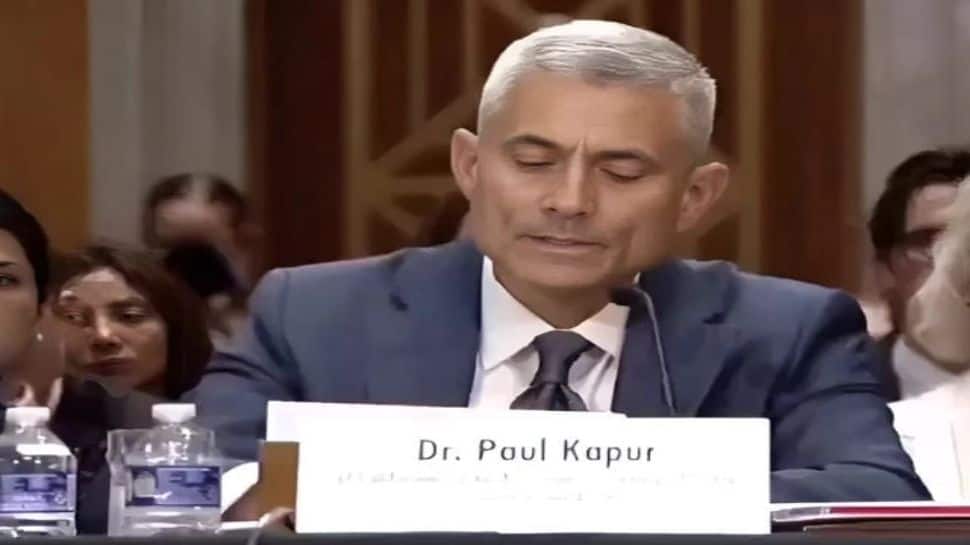
Washington D.C.: In a move that highlights America’s focus on South and Central Asia, the US Senate confirmed Indian-origin academic S Paul Kapur as assistant secretary of state for South and Central Asian Affairs on October 7, despite the ongoing government shutdown.
Kapur replaces Donald Lu and is now poised to shape Washington’s engagement with countries, including India, Pakistan, Bangladesh and Afghanistan.
The White House announced the appointment on X, stating, “Paul Kapur, of California, as Assistant Secretary of State for South Asian Affairs.”
Kapur was among 107 nominees cleared by the Senate and is expected to steer US diplomacy across a region of rising strategic importance.
Who Is Paul Kapur?
Born in New Delhi to an Indian father and an American mother, Kapur brings expertise in South Asian security and foreign policy. He presently serves as a professor at the US Naval Postgraduate School and is a visiting fellow at Stanford University’s Hoover Institution.
His experience includes a tenure on the State Department’s Policy Planning Staff during the previous Trump administration, where he focused on Indo-Pacific strategy and US-India relations.
He holds a PhD from the University of Chicago and a bachelor’s degree from Amherst College. His scholarly work spans decades, covering nuclear strategy, security dynamics and geopolitical challenges across South Asia.
Kapur is the author of ‘Jihad as Grand Strategy: Islamist Militancy, National Security and the Pakistani State’ and ‘Dangerous Deterrent: Nuclear Weapons Proliferation and Conflict in South Asia’. His research often emphasises that Pakistan’s use of jihadist groups is a deliberate state policy, a perspective that could signal a tougher US stance toward Islamabad under his leadership.
He also co-authored ‘India, Pakistan and the Bomb: Debating Nuclear Stability in South Asia’ and co-edited ‘The Challenges of Nuclear Security: US and Indian Perspectives (2024)’.
His writings have appeared in prominent journals and outlets, including International Security, Security Studies, Asian Survey, The Wall Street Journal and The National Interest.
With Kapur at the helm, Washington is expected to recalibrate its diplomatic and strategic engagement across South and Central Asia, balancing longstanding alliances with a focus on security, nuclear stability and regional cooperation.