

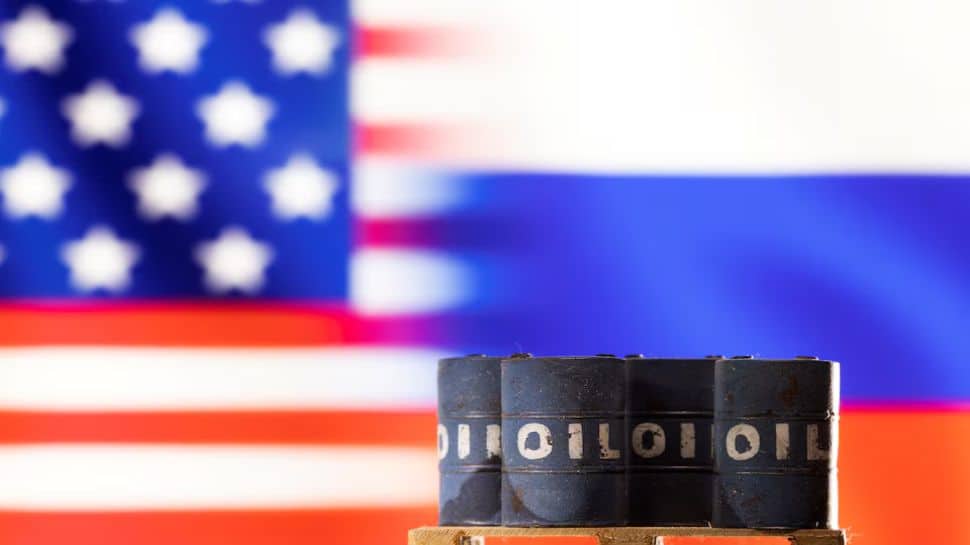
New Delhi: Washington sees the beginning of a new and puzzling chapter in global trade politics. U.S. President Donald Trump has imposed an extra 25% tariff on India for buying Russian oil. This brings the total American tariff on India to 50%. The Trump administration claims this move aims to pressure New Delhi to help end the war in Ukraine by cutting off Russian energy imports. But a glaring question remains unanswered: Why has the United States not taken similar punitive actions against China, the world’s largest buyer of Russian oil?
According to Chinese customs data, Beijing imported a record 109 million tons of Russian energy last year. That accounts for nearly one-fifth of China’s total energy imports. India, by comparison, brought in 88 million tons of Russian oil in 2024. By these numbers, China clearly provides more economic support to Russia. This has led to accusations that China indirectly aids Russia’s war efforts against Ukraine. But the United States remains silent on Beijing’s alleged role while turning its ire solely toward India.
Both major American political parties recently proposed a bill titled the ‘Russia Sanctions Act 2025’. This bill, if passed into law, will give the U.S. government the authority to impose sanctions on any country buying Russian oil or natural gas. The legislation allows for tariffs as high as 500% on countries believed to be supporting Russia economically.
Reports suggest U.S. senators await Trump’s approval before pushing the bill further. This could reshape global energy trade relations in the months ahead.
When asked on August 15 by Fox News if he planned to impose secondary sanctions on China after his recent meeting with Russian President Vladimir Putin in Alaska failed to reach a ceasefire agreement, Trump replied with hesitation. He said the recent events made him feel that immediate action was unnecessary. He left open the possibility of reconsideration in the coming weeks but stressed no urgent need for new measures.
Experts say Trump’s restraint stems from ongoing negotiations with China for a broad trade deal. Rare earth minerals lie in the centre of these talks. From automotive parts to green energy technology and military equipment, these 17 critical elements power a wide range of industries. China controls much of the mining and processing of these minerals, giving it leverage over American industries that heavily depend on them. Rare earths remain a key bargaining chip in the complex U.S.-China trade relationship.
Another reason for Trump’s softer approach toward China involves concerns about rising inflation in America. Increasing tariffs on China at this moment could trigger price hikes. American retailers prepare for the holiday season, stocking up on Chinese-made clothing, decorations and many consumer goods. A tariff hike would push prices higher, affecting millions of American shoppers and potentially hurting Trump’s domestic standing.
In recent weeks, Trump has taken steps to ease trade tensions with China. Earlier this month, the United States relaxed export restrictions on advanced semiconductors, a major demand from Beijing. On August 11, Trump approved Nvidia, an American chipmaker, to sell advanced chips to China, but with a condition: 15% of sales revenue in Beijing must be paid to the U.S. government. This move signals a willingness to compromise amid delicate negotiations.
Trump’s tough stance on India contrasts with his cautious approach toward China. America’s tangled economic and geopolitical interests shape this uneven policy. For now, India bears the brunt of punitive tariffs while China continues buying Russian oil with minimal consequences. The unfolding story reveals the complex balancing act behind Washington’s strategy and the sensitive nerve it tries to protect.