

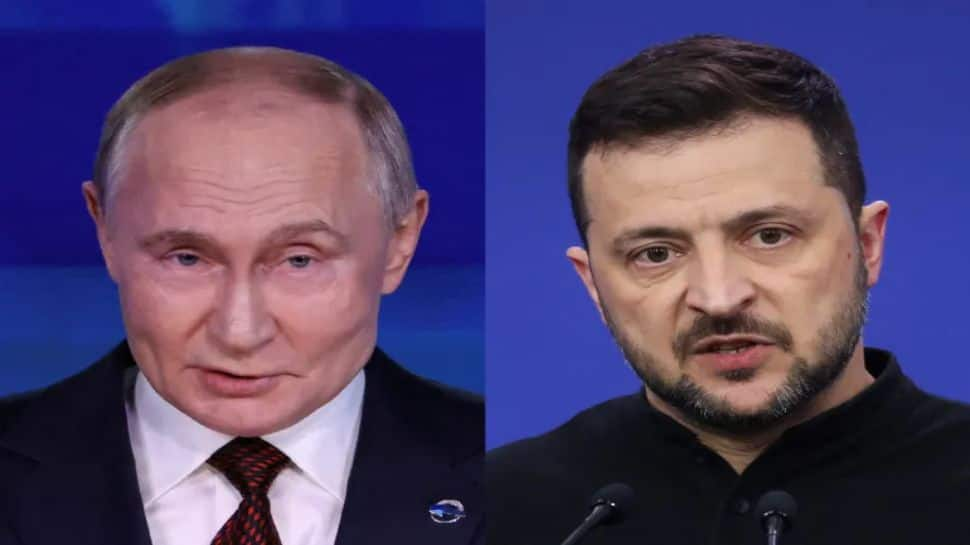
Washington: Hopes for a direct meeting between Russian President Vladimir Putin and Ukrainian President Volodymyr Zelensky dimmed this week despite signals from Washington that such a summit could be next.
After a call between Putin and former U.S. President Donald Trump, Kremlin aide Yury Ushakov told reporters the two sides might consider “raising the level of representatives” in future talks. He did not mention the leaders themselves, offering no sign Moscow is preparing for a face-to-face meeting.
Speaking on state television, Russian Foreign Minister Sergey Lavrov said Moscow does not rule out talks in any format, but insisted top-level contacts require “the utmost care” in preparation.
The hesitation reflects Moscow’s broader stance on the war. Russia recognised Donetsk and Luhansk as independent in 2022 and Putin has repeatedly argued Ukraine is historically and culturally inseparable from Russia. A meeting with Zelensky would force him to acknowledge Ukraine’s independence, a step analysts say he is unwilling to take.
Putin will have to accept the failure of sitting down with a president he considers a joke from a country that doesn’t exist. And such a move could be hard to justify domestically.
He has brainwashed Russians on state television that Zelensky is a Nazi, that Ukraine is a puppet state of the West, etc. He won’t be able to justify his sudden talks with his Ukrainian counterpart.
The Kremlin has also questioned Zelensky’s mandate, pointing to postponed elections under martial law. A recent Russian “peace” proposal required Ukraine to hold elections before any treaty. Russian officials rarely use Zelensky’s name, referring instead to “the Kyiv regime”.
When Zelensky travelled to Turkey in May for direct talks, Putin stayed away and sent only a delegation led by a historian.
Analysts say Putin sees little benefit in a leader-level meeting unless Ukraine is ready to make concessions. The Russian president’s key demands include ceding territory still under Kyiv’s control. For now, Zelensky has ruled out those terms.
Putin views Trump as central to any breakthrough. The U.S. president is seen as an enabler of the Russian vision of the settlement and for that the United States is supposed to work with Kyiv to push them to be more flexible and open to Russian demands. Putin will not risk the optics of a failed summit with Zelensky.
Trump, meanwhile, told supporters he had “begun the arrangements” for a Putin-Zelensky meeting. By the next morning, his tone shifted on Fox News. “I sort of set it up with Putin and Zelensky, and you know, they are the ones that have to call the shots. We are, we are 7,000 miles away,” he said.
Putin shows no sign of compromise. He secured a summit with Trump in Alaska, avoided making concessions on a ceasefire and seen sanctions pressure falter. Russian forces escalated drone and missile strikes this week, launching 270 drones and 10 missiles on Monday night.
With military pressure as his fallback, Putin still calculates leverage. The unanswered question in Washington and Moscow is if talks collapse again, who will Trump blame?