

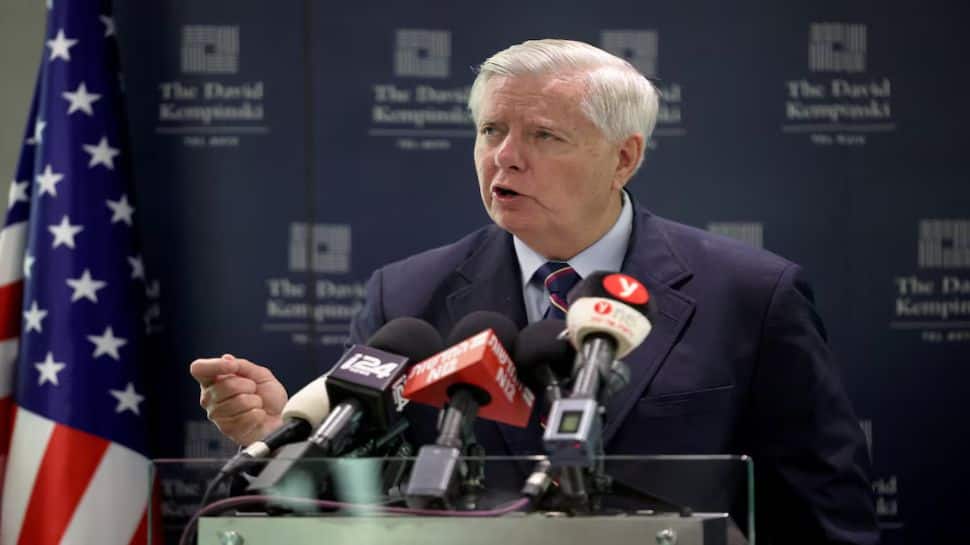
Washington: US Senator Lindsey Graham, in a strongly worded statement, issued a warning to countries still purchasing oil from Russia. His comments pointed directly at India, China and Brazil, holding them responsible for indirectly fueling Russian aggression.
“India, China, Brazil and others who prop up Putin’s war machine by buying cheap Russian oil: How do you feel right now that your purchases have resulted in innocent civilians, including children, being killed?” he wrote on X (formerly Twitter), adding, “India is experiencing the cost of supporting Putin. To the rest, you will soon, too.”
India, China, Brazil and others who prop up Putin’s war machine by buying cheap Russian oil: How do you feel right now that your purchases have resulted in innocent civilians, including children, being killed?
India is experiencing the cost of supporting Putin. To the rest, you… https://t.co/G1KeSmKv1J
— Lindsey Graham (@LindseyGrahamSC) August 28, 2025
The senator’s post came shortly after Russian missile strikes devastated parts of Kyiv on Thursday, killing at least 10 people and injuring many more. Reports from Euro News confirmed that the assault also damaged the European Union’s diplomatic mission in Ukraine’s capital.
ALSO READ: Why Modi’s Two Days In Japan Could Redefine The Next Decade For India
Ukrainian President Volodymyr Zelenskyy condemned the missile attack, describing it as “another massive attack against our cities and communities”. He added that emergency teams were still working to rescue survivors trapped beneath the rubble of a destroyed residential building.
“At least 8 people have already been confirmed dead. One of them is a child. My condolences to all their families and loved ones,” he wrote on X.
As international outrage mounts, New Delhi finds itself navigating not only global scrutiny but also rising trade-related pressure from Washington. Just days after Senator Graham’s post, India’s External Affairs Minister S. Jaishankar responded firmly to recent US-imposed tariffs, calling them “unjustified and unreasonable”.
Raised to over 50 percent, U.S. tariffs were introduced during the Trump administration and are seen as a penalty linked to India’s oil dealings with Russia.
“What we are concerned about is that red lines are primarily in the interest of our farmers and, to some extent, our small producers. So when people pronounce that we have succeeded or failed, we as a government are committed to defending the interests of our farmers and small producers. We are determined on that. That is not something we can compromise,” said Jaishankar.
In a statement released on Thursday, the Ministry of Commerce acknowledged the new tariffs’ potential short-term damage to exports in key sectors. Textiles, chemicals and machinery are expected to bear the brunt, though the ministry predicted only limited long-term economic disruption.
“It is understood that 50 percent tariffs are going to impact trade, especially the sectors on which tariffs are there. They will suffer some trade loss in the United States. There will be an impact on textiles, chemicals, machinery, etc. for the short run, but it will not be a very long-term loss,” said a senior official.
ALSO READ: Japan Is Already In Your Home, But You Didn’t Notice: How Tokyo Became Part Of Daily Indian Life
Industry leaders have voiced concerns about delayed payment cycles and declining order volumes. Businesses are already reporting stress due to tightening cash flow.
“In the short run, their orders will slow down. The money that they have to get back from their exports will also slow down. So they will face some liquidity crunch and will be under financial strain to run their operations,” said the official.
With both economic pressure and geopolitical rhetoric intensifying, India is now facing tough questions from the West while standing firm on its trade and diplomatic stance.