

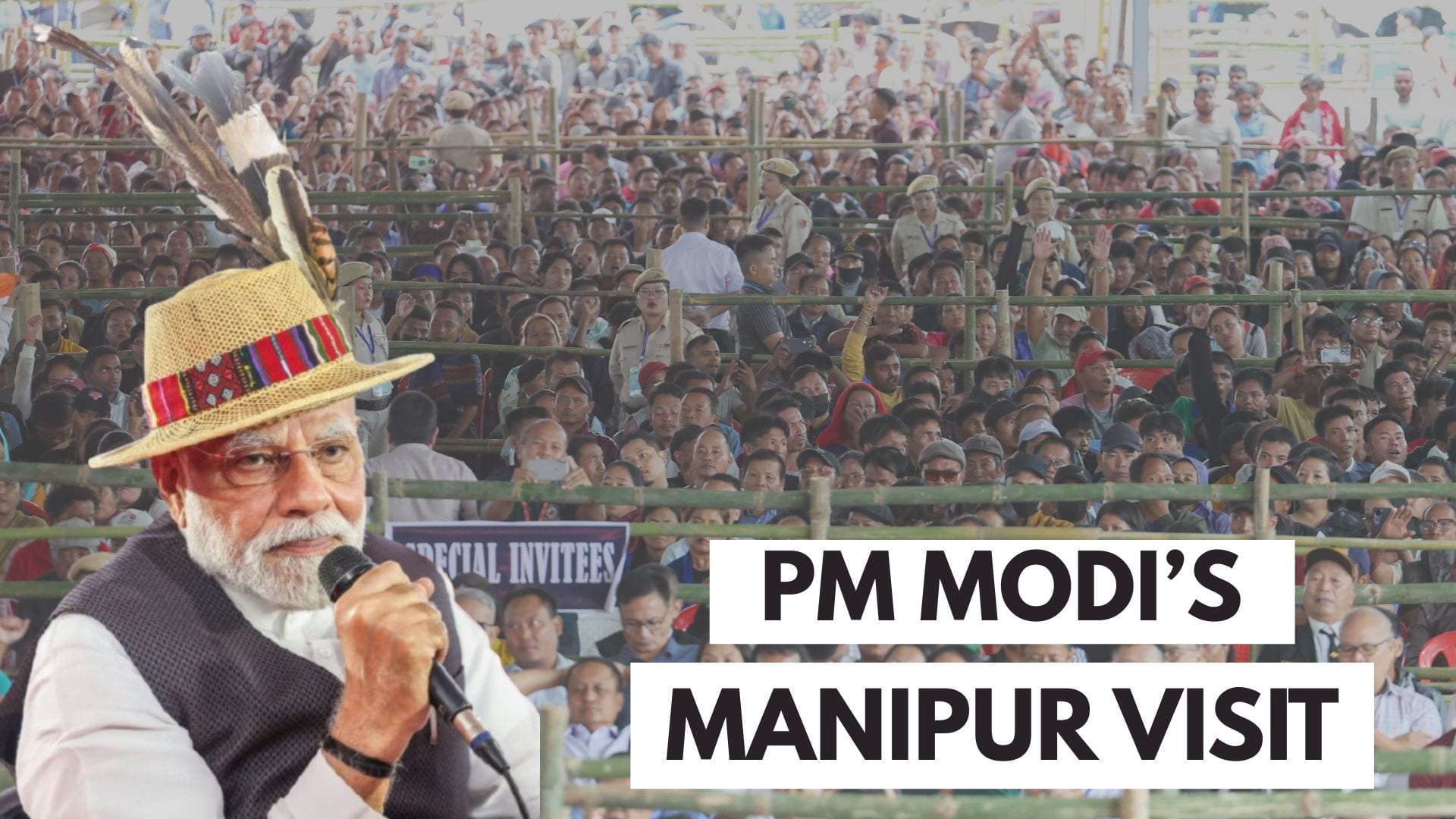
PM Modi’s Manipur Visit: On 13 September 2025, Prime Minister Narendra Modi made a long-awaited visit to Manipur, a state still reeling from the ethnic violence that broke out over two years ago. His arrival, though delayed, marked a symbolic and strategic step in India’s effort to rebuild trust, restore peace, and bring development to a region fractured by conflict.
The violence that erupted on May 3rd, 2023, between the Meitei and Kuki-Zo communities shattered years of relative calm in the northeastern state. As per the records and reports, over 250 lives were lost, more than 60,000 people were displaced, and deep social divides resurfaced. For months, images of burning homes, grieving families, and mass displacements flooded television screens and social media feeds. It was no longer a distant regional conflict — it became a national conversation.
This was not Manipur’s first brush with ethnic unrest. In the 1990s, the Naga-Kuki conflict took over a thousand lives. However, unlike then, this time every development was captured in real-time, fueled by round-the-clock news coverage and the reach of smartphones. The spotlight was intense, and with it came growing public pressure on the central government, and on Prime Minister Narendra Modi himself, to act.
For months, the Opposition questioned the Prime Minister’s silence and absence. Many believed his lack of a visit showed indifference. Some even blamed this perceived inaction for the BJP’s loss of both Lok Sabha seats in the state. But that narrative may change with PM Modi’s visit last week. Despite bad weather preventing him from flying into Churachandpur, an area dominated by the Kuki-Zo community, PM Modi chose to travel over 90 minutes by road to meet people affected by the conflict. His next stop was Imphal, the heart of Meitei-majority territory, where he addressed a separate gathering and announced infrastructure projects aimed at rebuilding the region.
Symbolism And Substance
At both venues, the messaging was deliberate and layered. In Churachandpur, where development has lagged behind, Modi laid the foundation for several projects — super-speciality healthcare centres, hostels for working women, better schooling infrastructure, and IT initiatives. “Every corner of Manipur deserves equal attention and opportunity,” he said, adding, “This government is committed to bringing real change, not just promises.”
In Imphal, the Prime Minister acknowledged the sacrifices made by Meitei soldiers in national operations, especially referencing the bravery of Deepak Chingakham, who lost his life in Operation Sindoor, carried out following the Pahalgam Attack in the Kashmir valley. He also praised Ima Keithel, Asia’s oldest women-run market, as a symbol of strength and resilience. “Our mothers, our sisters are not just caregivers, they are the heartbeat of our economy and culture,” he said, receiving warm applause.
A Balancing Act
The visit was not just about announcements. It was about sending a message of inclusion to both communities and to the nation. Governor Ajay Bhalla, who accompanied the Prime Minister, reiterated this vision, calling Churachandpur a “living example of cultural richness and coexistence.” He also addressed one of the state’s most contentious issues, illegal immigration.
“The Centre is firm in addressing infiltration through fencing, biometric verification, and reforming the Free Movement Regime,” he noted, touching on a subject that both divides and unites the communities.
While the Prime Minister’s words were welcomed, many also viewed them through a political lens. The Kuki-Zo Council used the occasion to renew its call for a “separate administration”, a long-standing demand that seeks political autonomy. On the other hand, Meitei civil group COCOMI rejected such calls outright, calling them a threat to Manipur’s unity. Instead, they pushed for the implementation of a National Register of Citizens (NRC) and stricter immigration controls.
Towards Reconciliation
President’s Rule was imposed in Manipur in February 2025, following months of unrest and public outcry. The removal of the deeply unpopular Chief Minister N Biren Singh signalled a reset. Since then, security measures have been tightened, looted weapons are being recovered, and communication with militant groups has improved. A renewed Suspension of Operations (SoO) agreement with Kuki-Zo armed factions has helped lower tensions and create space for dialogue.
“We are now in a phase where the focus is not only on containing violence but also on healing and rebuilding,” said a senior Home Ministry official, adding that the Prime Minister’s visit signals that we are entering a new chapter.
Bridge To Future
In his address, Prime Minister Narendra Modi acknowledged the pain that still lingers. “What has happened here is not just a tragedy for Manipur, but an injustice to our ancestors and a betrayal of our future generations,” he said, stressing the need to build bridges between the hills and the valley, both literally and metaphorically.
But challenges remain. Deep distrust between communities, competing political demands, and the trauma of the past two years cannot be swept away by a single visit. For now, PM Modi’s presence on Manipur’s soil might have brought a sliver of hope, but the road ahead needs a lot of attention.