

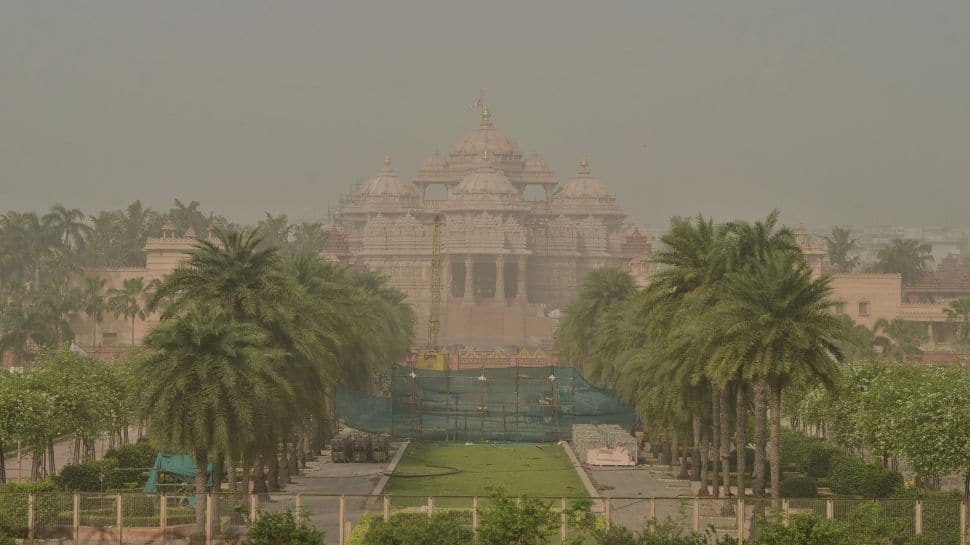
As the festival of Diwali approaches, Delhi and its surrounding National Capital Region (NCR) are once again facing deteriorating air quality, marking the beginning of the annual pollution season.
According to real-time data from AQICN, Delhi’s overall Air Quality Index (AQI) on Sunday hovered around 177, with PM2.5 levels at 155 and PM10 at 177, both falling under the “moderate to poor” category. In several parts of NCR, including Noida and Gurugram, air quality has worsened sharply over the past week. On October 11, the city recorded an AQI of 193, up from the previous week’s average of 120, indicating a steady decline.
Experts from the India Meteorological Department (IMD) and the Early Warning System for Delhi have forecast that the AQI is likely to enter the “poor” zone by mid-October as wind speed drops and temperature decreases, leading to pollutant accumulation.
Main Causes Behind Rising Pollution
The spike in pollution is being attributed to a mix of factors:
- Low wind speed and temperature inversion are trapping pollutants near the surface.
- Stubble burning in neighbouring states like Punjab and Haryana has resumed, sending smoke and particulate matter into Delhi-NCR.
- Vehicular emissions, road dust, and construction activity continue to contribute heavily to local pollution.
- With Diwali approaching, experts have said that firecracker use could further push AQI levels into the severe range, as seen in previous years.
Health Risks and Public Advisory
Doctors have warned that prolonged exposure to poor air can cause breathing problems, eye irritation, and fatigue, especially for children, the elderly, and those with asthma or heart conditions. Health experts have recommended limited outdoor activity, using air purifiers indoors, and wearing N95 masks when stepping outside.
Outlook Ahead of Diwali
With the beginning of winter and calm weather conditions, Delhi’s pollution levels are expected to worsen further in the coming days. Authorities have urged residents to avoid using firecrackers and to follow pollution-control guidelines.
Environmental groups have also called for stricter enforcement of construction dust regulations and increased monitoring of stubble-burning incidents to prevent a repeat of last year’s post-Diwali “severe” air quality episode.