

New Delhi: A day after violent protests erupted in Ladakh demanding full statehood and constitutional safeguards, the Centre reaffirmed its commitment to addressing the region’s concerns, highlighting ongoing dialogue and concrete steps taken to protect local interests.
According to reports, at least four people were killed and around 100 were injured during Wednesday’s clashes, prompting authorities to impose curfew measures in parts of Leh and deploy paramilitary forces to restore order. According to the Union Home Ministry, violence began at approximately 11:30 am and was brought under control by 4:00 pm.
Officials familiar with the developments stated that the government remains fully engaged with local stakeholders and has made “genuine efforts” to resolve key issues surrounding land rights, job protection, and Ladakh’s cultural identity.
“On 27 May, a High-Powered Committee (HPC) meeting was held with representatives from the Apex Body of Leh (ABL) and the Kargil Democratic Alliance (KDA), along with the region’s Member of Parliament and Chief Executive Councillors,” said a government source, as per reports, adding, “The main goal was to break the recruitment deadlock, which was achieved entirely through dialogue. All outcomes were based on consensus, and senior leaders from both ABL and KDA signed the minutes of the meeting.”
The source added that the same meeting paved the way for further discussions on constitutional safeguards and the possible creation of separate administrative and police services for Ladakh. A follow-up round of talks has been scheduled for 6 October.
A Ladakhi delegation also met with Union Home Minister Amit Shah in what was described as a “positive” conversation centred on Ladakh’s long-term future.
As part of recent measures, the Centre issued a notification for government recruitment in July, including a five-year age relaxation to benefit local candidates. These developments, officials claim, demonstrate the government’s commitment to inclusive engagement.
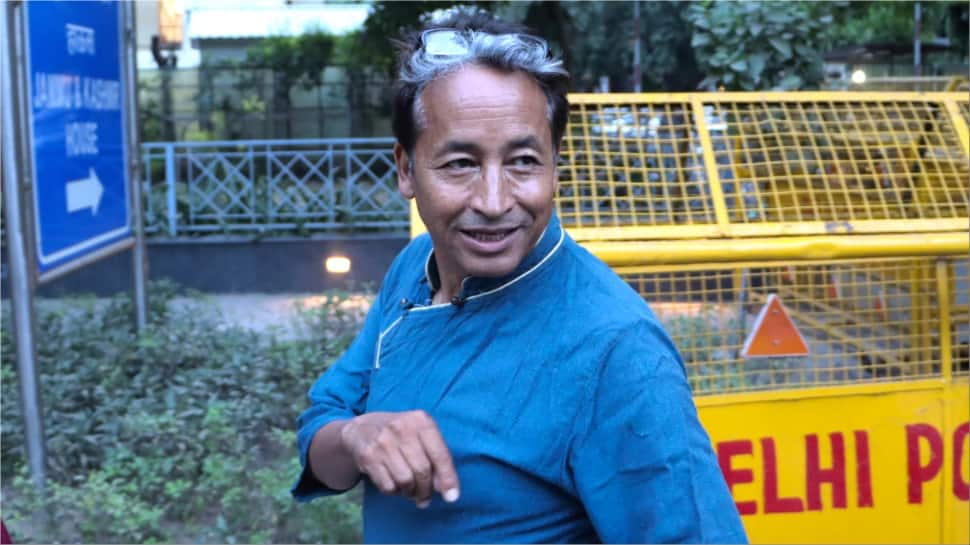
However, tensions flared when climate activist and education reformer Sonam Wangchuk, along with other regional leaders, took what officials described as a “sudden U-turn”, allegedly shifting from dialogue to incitement.
“But despite all these positive developments, leaders like Sonam Wangchuk and others suddenly took a U-turn. Instead of continuing the dialogue, they switched to incitement and instigation,” said a senior government official.
“This shift does not seem to have any logical reason and appears more like a political move aimed at keeping Ladakh in a constant state of unrest for personal advantage. The Government, from its side, has always shown willingness to talk and never backed out of any meetings,” said the official.
The official also criticised rhetoric involving hunger strikes and self-immolation, calling it counterproductive at a time when the Centre is actively engaging in discussions.
On the issue of constitutional safeguards, officials underlined that the government had included this demand in the HPC’s terms of reference from the outset.
“Ladakh deserves constitutional safeguards, and this is already recognised by the Government. But any such safeguards must be carefully deliberated,” the official added.
Existing Safeguards Among Strongest In India
Officials also pointed out that Ladakh currently enjoys some of the strongest legal protections in the country. Scheduled Tribes from the region benefit from up to 85% reservation in employment and education. “Even if outsiders live here for a thousand years and gain domicile, they won’t qualify,” an official stressed.
In addition, the government has recognised Ladakh’s linguistic diversity, designating English, Hindi, Urdu, Bhoti, and Purgi as official languages, while also supporting Shina, Brokskat, Balti, and Ladakhi.
Women’s political representation has also seen enhancement through a rotational one-third reservation in the Ladakh Autonomous Hill Development Council (LAHDC).
On land-related issues, the Centre is reportedly reviewing laws around Nautor land and other local matters to ensure changes that prioritise the interests of Ladakhis.
While the situation remains tense, government officials maintain that they are committed to resolving all outstanding issues through dialogue and consensus-building, urging regional leaders to return to the negotiating table.