

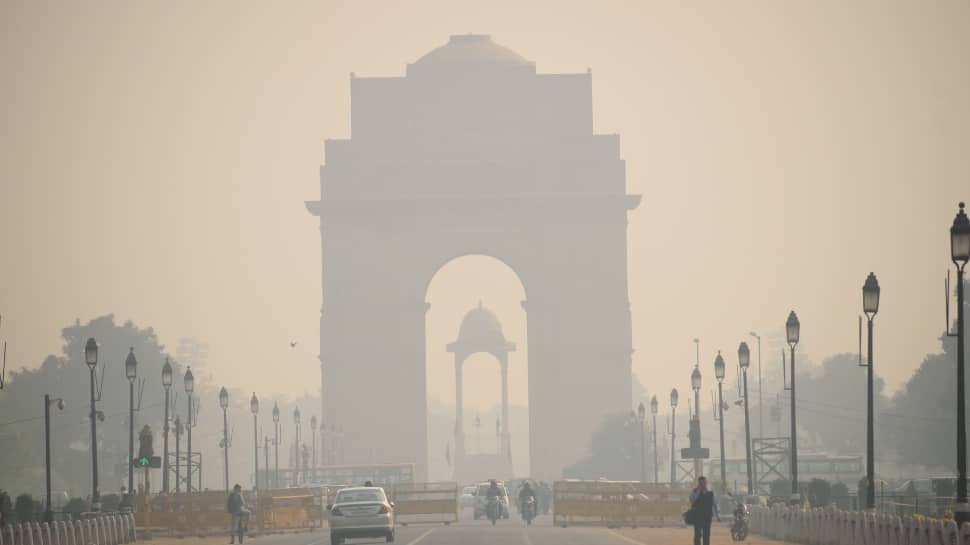
The Central Air Quality Management (CAQM) has enforced GRAP-1 measures across Delhi-NCR after the Air Quality Index (AQI) hit 211 on October 14, placing it in the “Poor” category.
This decision follows forecasts from the IMD and IITM, which indicate that pollution levels are likely to remain at similar levels in the coming days.
The Sub-Committee on GRAP, after reviewing the current air quality and weather conditions, directed all relevant agencies in the NCR to implement, monitor, and review Stage 1 measures immediately to prevent further deterioration.
What is GRAP-1?
The Graded Response Action Plan (GRAP) is a structured framework of measures aimed at controlling rising air pollution in Delhi-NCR. The AQI under GRAP is classified into five categories:
Good: 0–50
Satisfactory: 51–100
Moderate: 101–200
Poor: 201–300
Very Poor: 301–400
Restrictions Under GRAP-1
With GRAP-1 in effect, several restrictions are being enforced to control dust and emissions:
Anti-smog guns and dust control measures at all construction and demolition sites.
Large projects (over 500 sq. m) must follow approved dust management plans.
Open burning of waste, including leaves and garbage, is prohibited.
Roadside food stalls and commercial kitchens cannot use coal or wood; clean fuels such as electricity or gas are mandatory.
Diesel generators are limited to essential or emergency use.
Vehicles causing pollution may face fines or impoundment.
Traffic control measures include police deployment at key intersections and engine shutdown at red lights.
Older vehicles are banned: diesel vehicles over 10 years old and petrol vehicles over 15 years old.
Coordinated Action Across States
The CAQM order has been shared with the governments of Uttar Pradesh, Haryana, and Rajasthan, as parts of these states fall within the NCR. Agencies are required to strictly monitor and implement GRAP measures across the region.
The Sub-Committee on GRAP will continue to track AQI trends and adjust measures as needed to ensure a coordinated response.
Experts point out that the spike in pollution is caused by vehicular emissions, industrial activity, crop residue burning in neighbouring states, and weather conditions that limit air dispersion.