

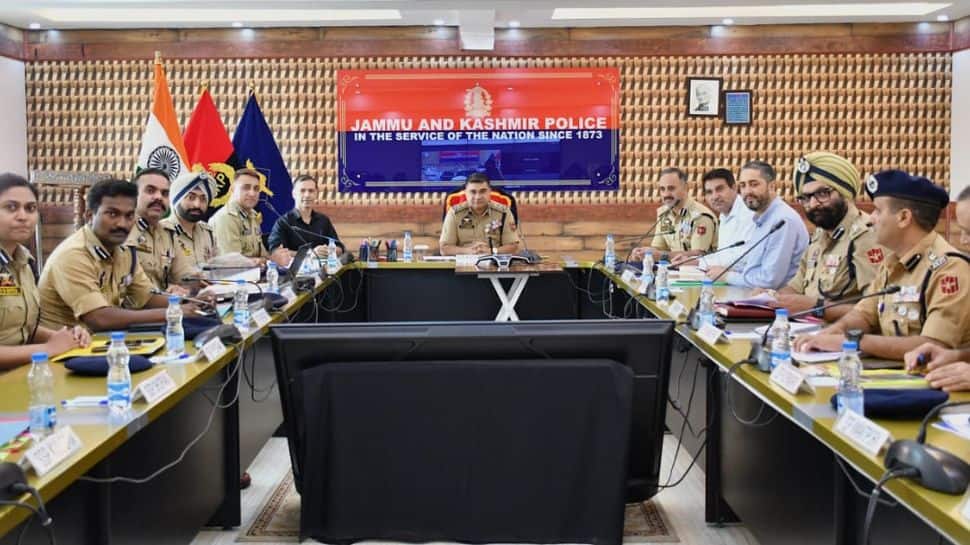
Inspector General of Police (IGP) Kashmir Zone, V.K. Birdi (IPS), chaired a comprehensive security review meeting at the Police Control Room in Srinagar.
The meeting was convened to evaluate the current security scenario across the Kashmir Zone and to outline strategies for maintaining peace amid potential threats. Birdi emphasized proactive measures to ensure a robust security grid in the region and provided targeted instructions to enhance operational effectiveness.
Officers were urged to work effectively on cases, particularly those related to terrorism and narcotics, in order to improve conviction rates. He stressed the need for effective follow-up mechanisms for prosecutions, along with transparency and accountability in investigations, to safeguard citizens’ rights.
A strong call was made to intensify area domination exercises, with particular focus on night patrolling in sensitive and vulnerable locations. This, Birdi noted, would increase police visibility and deter unlawful activities.
Strict monitoring of anti-national elements (ANEs) was mandated, alongside enhanced market checks to prevent illegal activities. Officers were also directed to reinforce security checkpoints, especially during night hours, at entry and exit points as well as in high-risk areas.
The review further assessed protections for critical infrastructure, such as highways, railway tracks, and stations across the Valley, underscoring the need for heightened alertness and rapid response capabilities.
IGP Birdi reaffirmed the Jammu and Kashmir Police’s unwavering commitment to upholding peace and security, calling for timely case resolutions and greater inter-agency coordination.
The meeting was attended by almost all senior security officials, including the IGP Security J&K, IGP Railways, IG BSF Frontier Headquarters, IG CRPF Srinagar, and all Range Deputy Inspectors General (DIGs) of Kashmir Zone.
District officers from across the Valley also provided briefings on the law-and-order situation in their jurisdictions, deployment plans, and intelligence inputs. This collaborative approach allowed for real-time assessments and immediate directives.