

In a controversial case that has sparked national debate, an investigation by ZEE News has revealed that members of an alleged religious conversion racket in Delhi believe they are acting on divine command. Abdul Rehman, identified as a key figure in this network, has been accused of orchestrating the mass conversion of Hindus to Islam. In a startling video, Rehman’s wife and daughter, both seen in burqas, openly claim on camera that converting people to Islam is a command from Allah.
Their calm and confident manner during the interview raised concerns among viewers and experts alike, suggesting a deep-rooted ideological influence. The women, showing neither hesitation nor remorse, stated that their actions were in line with religious duty. Rehman and his family, much like the earlier exposed figure Chhangur, allegedly turned religious conversion into a full-time operation based out of Delhi.
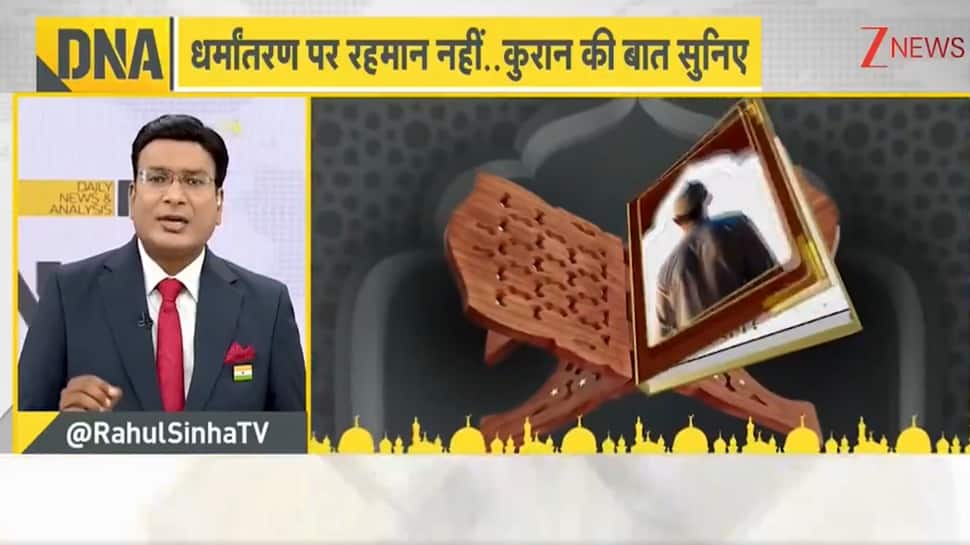
In today’s DNA, ZEE News questioned whether such acts are truly endorsed by Islamic scripture. To explore this, the news channel consulted Islamic scholars and examined Quranic teachings on the matter. The scholars unanimously stated that Islam strictly prohibits forced or manipulative conversions. According to their interpretation, the Quran does not support coercion in matters of faith under any circumstances.
#DNAWithRahulSinha | दिल्ली से यूपी..धर्मांतरण पर बड़ा खुलासा, ब्रेनवॉश कैसे किया जाता है..LIVE देखिए
क्या धर्मांतरण..अल्लाह का हुक्म है?#DNA #ReligionConversion @RahulSinhaTV pic.twitter.com/f4p7Ib6GL5
— Zee News (@ZeeNews) July 22, 2025
A key verse cited was Surah Yunus, Ayah 99, which clearly states: “If your Lord had willed, all the people on earth would have believed. Will you then compel people to become believers?” Scholars explained that this verse conveys a powerful message of religious freedom and coexistence, rejecting any form of force or deceit in conversion practices.
Further, scholars pointed out that pressuring or luring individuals into changing their faith through fear, greed, or misinformation is both a sin in Islam and a crime under Indian law. They emphasized that such actions distort the essence of Islamic teachings and do not reflect the principles of the Prophet Muhammad, who preached tolerance and respect for all faiths.
In light of this, religious scholars condemned the actions of Abdul Rehman and others accused of similar offenses, calling them dangerous extremists who exploit religion for personal or political agendas. They warned that such misinterpretations of the Quran not only mislead people but also harm the social fabric of the country.
Through this investigation and conversations with Islamic scholars, it becomes evident that the Quran does not endorse forced religious conversion. Instead, the practice promoted by figures like Abdul Rehman stems from personal fanaticism and deliberate misreading of sacred texts, which must be addressed both spiritually and legally.