

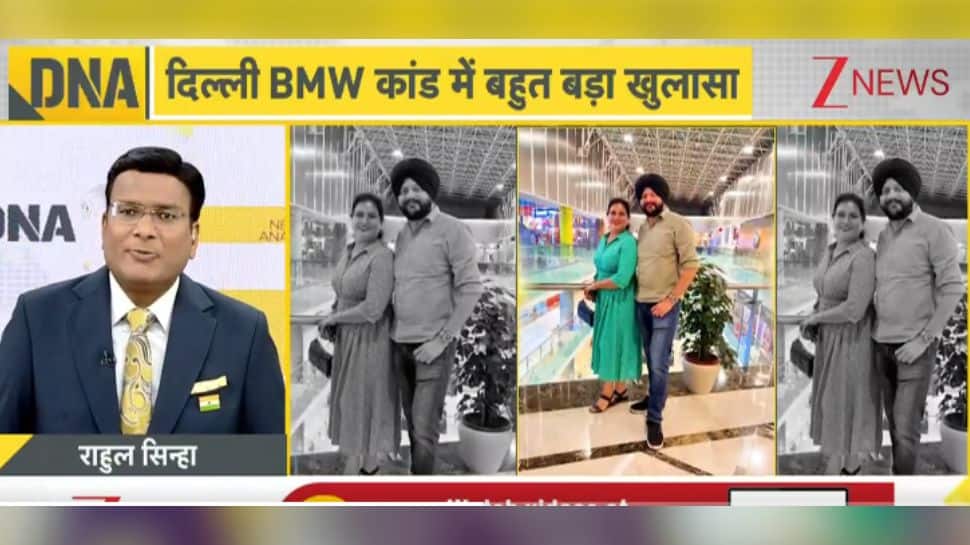
A tragic road accident near Dhaula Kuan in Delhi has claimed the life of Navjot Singh, Deputy Secretary in the Finance Ministry, raising serious questions about India’s road safety crisis and post-accident medical response.
Singh and his wife were returning home on a bike when a BMW, allegedly driven by a woman named Gagandeep Kaur, rammed into them. Both suffered severe injuries. Shockingly, instead of rushing them to a nearby hospital, the accused and her husband transported the couple nearly 20 kilometers away, which is New Life Hospital in GTB Nagar, where Kaur’s father is a partner. Singh succumbed to his injuries before receiving critical care.
In Today’s DNA, Zee news Managing Editor, Rahul Sinha analysed Delhi’s BMW crash incident.
तख्तापलट कराने वाले का ही ‘तख्तापलट’!
दिल्ली BMW कांड में बहुत बड़ा खुलासा
अब दुनिया में ‘मुस्लिम आर्मी’ बनने वाली है!देखिए #DNA LIVE Rahul Sinha के साथ#ZeeLive #ZeeNews #DNAWithRahulSinha @RahulSinhaTV https://t.co/T0l0K4L0zL
— Zee News (@ZeeNews) September 15, 2025
This has fueled suspicions of foul play and deliberate evidence tampering, as multiple premier hospitals including AIIMS, Safdarjung, Army Hospital, and RML were within a 2–15 minute drive from the crash site. Singh’s family alleges that the delay in reaching a capable facility during the “golden hour” cost him his life.
Data underscores the gravity of the problem. India records 480,000 road accidents annually, killing nearly 175,000 people, with 40 per cent of victims dying due to delayed treatment. Conviction rates remain dismal: only 0.49 per cent of accused are punished in road accident cases. The incident echoes the infamous 1997 Sanjeev Nanda BMW case, where six people died, but the accused served only two years in jail.
Experts point to Norway as a model. Once notorious for accidents, Norway cut road deaths drastically through stricter licensing, reduced speed limits, vehicle fitness certifications, and constant review mechanisms. Deaths fell from 350 annually in the 1990s to around 50 today.
India, with one of the world’s highest accident fatality rates, faces an urgent need for systemic reforms, stricter laws, and immediate medical response mechanisms to prevent more tragedies like Navjot Singh’s.