

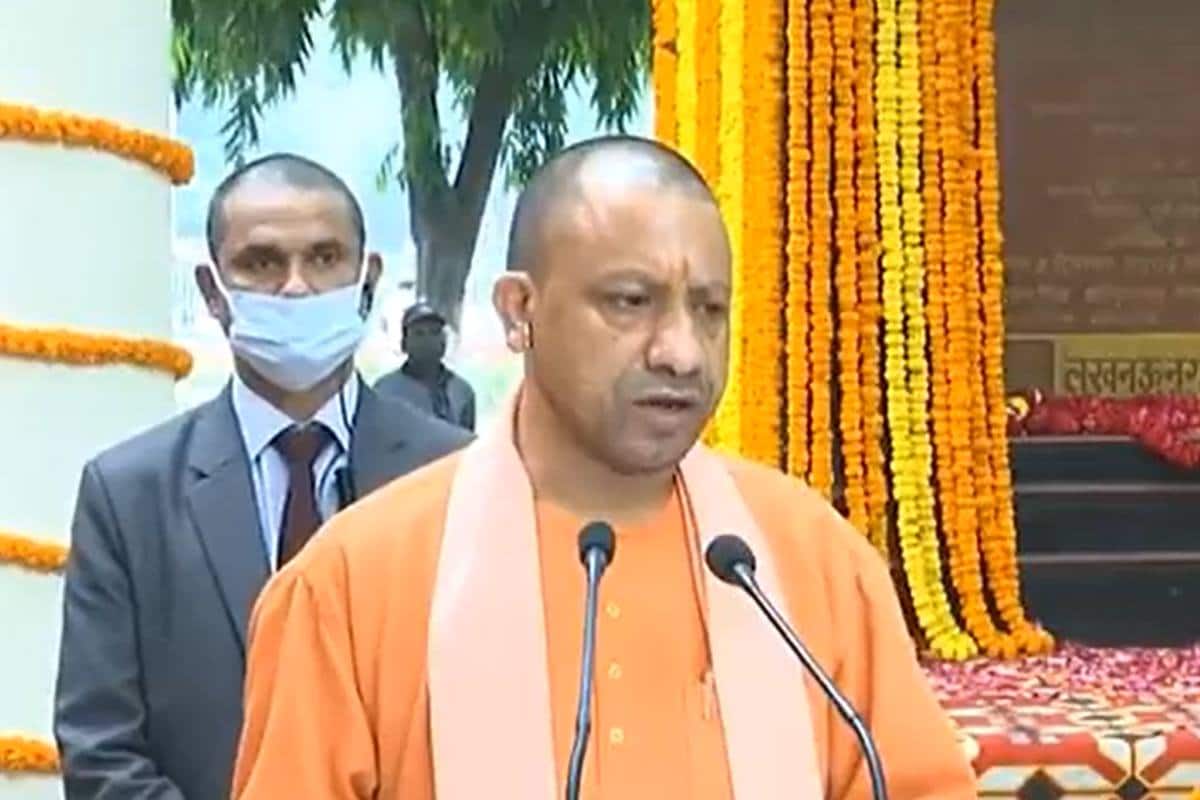
Uttar Pradesh Chief Minister Yogi Adityanath on Tuesday said that India, once a land of prosperity and abundance, suffered heavily during centuries of Islamic invasions, which not only reduced the Hindu population but also crippled the country’s agricultural production and economic output.
Speaking at a public event, the Chief Minister cited historical references to argue that India’s population patterns were deeply affected during the medieval period. He claimed that around the year 1100, the Hindu population stood at nearly 60 crore, but by the time India gained independence in 1947, it had declined to about 30 crore.
“Tell me, should our population have increased or decreased in these 800–900 years? Not only did the population decline, but agricultural production also went down. Those who died were not only killed by invaders but also perished from hunger, disease, and various forms of torture. This is how foreign slavery works—this country was subjected to the same oppression and exploitation,” Yogi Adityanath said.
He further stressed that despite India’s natural wealth and resources, divisions created along caste, region, and language lines weakened the society from within. According to him, this “foreign mentality” continues even today, with certain groups allegedly working to divide Indian society.
#WATCH | Uttar Pradesh CM Yogi Adityanath says, “…It is said that when Islam first attacked India, at that time, and even after that, by the year 1100, the Hindu population in India was 60 crore. And when the country gained independence in 1947, the Hindu population was only 30… pic.twitter.com/UePJotkiQc
— ANI (@ANI) September 23, 2025
Linking his remarks to Prime Minister Narendra Modi’s ongoing Vocal for Local campaign, the UP Chief Minister urged citizens to support Indian-made products and strengthen domestic industries. “The Prime Minister’s message is clear—we must promote whatever is made with the labour of Indian workers and the talent of our youth,” he added.
Yogi’s remarks come amid renewed political debates over India’s historical past and its implications for present-day identity and nation-building.