

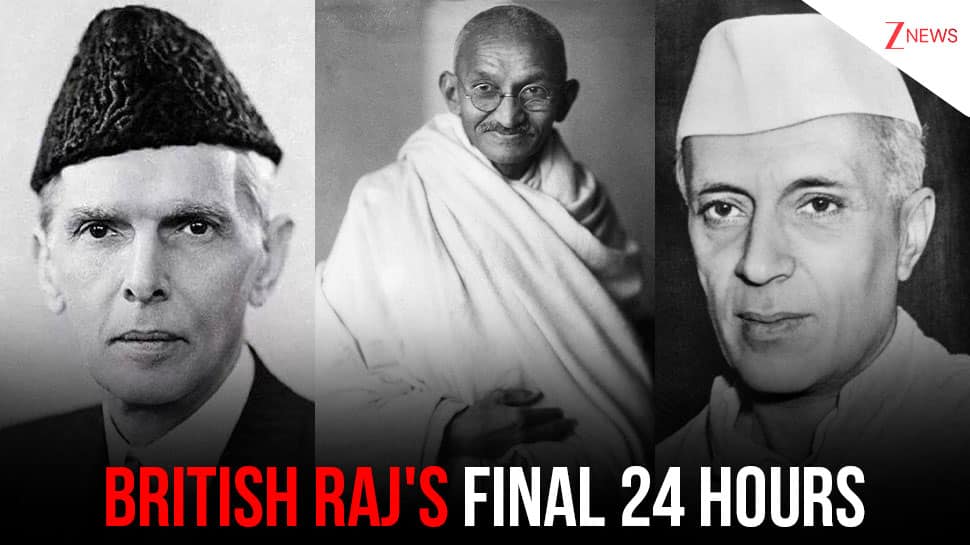
As India gets ready to celebrate its 79th year of independence, the exuberance of freedom is interwoven with the sweet-sour memories of a divided nation. On August 14, 1947, at sunrise over Karachi, Lord Louis Mountbatten’s plane landed, sending long shadows over the celebrating throngs. The last Viceroy of India, regal but sweating in his royal finery, had a busy day ahead of him. He had gone to swear in Muhammad Ali Jinnah as the first Governor-General of Pakistan and to give a welcome address. But with the clock ticking towards midnight, a last-minute chilling intelligence report accelerated his heartbeat: a conspiracy to kill Jinnah.
Why August 15? Mountbatten’s Hasty Decision
British Prime Minister Clement Attlee originally had the transfer of power to India set for June 30, 1948. But with growing unrest and the real possibility of inter-communal violence, Mountbatten ruled that the transfer had to take place much earlier. Cornered at a press conference for a specific date, Mountbatten made a spontaneous decision. “The date that I selected came out of the blue,” he conceded later, as recorded in “Freedom at Midnight.” He wanted an event that would seem resolute and in his command, revealing that he was “the master of the whole event.” Having considered several dates, “like a mill wheel revolving, registered by figures,” he picked August 15.
The date chosen by Mountbatten was of great personal significance. It was the second anniversary of the surrender of Japan to the Allies on August 15, 1945 – a moment remembered in connection with Mountbatten’s triumph as Supreme Commander of Allied Forces in Southeast Asia. He saw this moment as representing “a new birth in Asia,” turning military victory into a political victory.
The Astrologers’ Ominous Warning
Nonetheless, August 15, 1947, was considered very inauspicious by Indian astrologers. This was amply attested to in historical records. Astrologers announced that Friday, August 15, was a particularly unfavourable day for important new beginnings. It was Krishna Paksha Chaturdashi (the 14th day of the dark fortnight) and was followed by Amavasya (new moon), usually considered very unlucky for auspicious occasions such as the birth of a nation. Astrologers cautioned that starting India’s journey as an independent country on August 15 might bring disasters.
One leading astrologer, according to Lapierre and Collins’ “Freedom at Midnight,” even wrote to Mountbatten, beseeching: “For God’s sake, do not grant India freedom on August 15. If floods, famine, and massacres take place, it will be because independent India was born on a day that has been cursed by the stars.”
In order to bring these strong feelings into harmony, Indian leaders negotiated a compromise. The formal handover of power took place at midnight on the night of August 14 and August 15. It was symbolically and technically significant: whereas the Western calendar calculated it as the start of August 15, the Hindu calendar counted the new day only at dawn, and its inauspiciousness began only at dawn. Accordingly, having the ceremony at midnight was considered a means to avoid the unfavourable astrological risks inherent to August 15’s sunrise, respecting Mountbatten’s selected date and the astrologers’ advice.
Karachi, 9:00 AM: A City On Edge
The previous day, a CID officer in Karachi had dispatched the Viceroy a chilling warning: “Sir, there is a plot.” The intelligence reports indicated that at least one, and maybe several, bombs would be hurled at the open car bearing him and Jinnah along the Karachi streets the next morning (“Freedom at Midnight”).
Within Karachi’s Constituent Assembly building, an electric aura of expectation permeated the air. Mountbatten took the oath from Jinnah, the chain-smoking, tubercular barrister who had fought a Muslim state out of the decaying British Raj. Weak but unyielding, Jinnah lent his words a creed of harmony: “You are free; you are free to go to your temples, you are free to go to your mosques or to any other place of worship in this State of Pakistan.”
But while Karachi’s sky burst with fireworks and a 31-gun salute thundered, the festive mood hid a gathering tempest.
Punjab’s Bloody Fields
In Punjab’s blood-soaked plains, the story became savage. As refugees ran in opposite directions—Hindus and Sikhs to the east towards India, Muslims to the west towards Pakistan—the highways were killing fields. Trains that pulled up at railway stations carried horrible scenes of retribution: packed with bodies, throats cut, bodies mutilated. The canals of Lahore flowed red with blood, bearing severed limbs. Fanatics and bandits pillaged the innocent and weak. The price of Partition? An estimated two million dead, fifteen million displaced – one of the greatest forced migrations in human history.
The Assassination Plot Against Jinnah
Meanwhile, back in Karachi, sitting through the speeches, Mountbatten’s heart raced. He worried about Jinnah’s safety, who had not called off a “victory parade” despite the threats of assassination. “When their convoy arrived in Karachi, the air resonated with a heart-stopping 31-gun salute. There was a sea of anonymous faces. A crowd, vast, deliriously joyful and jubilant. Somewhere, on a street corner, around a bend, at a window or on a roof, lurked the man who wanted to murder them.” Mountbatten afterwards described the 30-minute ride as lasting 24 hours (“Freedom at Midnight”).
The reason for the plot to assassinate him was still unclear – religious extremism, political competition, or factional hatred. Yet the danger served to remind us of the precariousness of Pakistan’s birth. The health of Jinnah, already strained by tuberculosis, was now further compromised by the elusive foes within the jubilant crowds.
Calcutta: Mahatma’s Desperate Struggle
Away from the pomp, in the hot Calcutta slums, Mahatma Gandhi fought his desperate struggle. He had turned down invitations to celebrations, his place not being among politicians but among the ravaged city where Hindus and Muslims had brutally slaughtered one another. On this muggy morning, his weak frame buckled, his gait led by the motion of prayer. He was a source of hope amidst a city beset by despair. Fasting again, he took shelter in the humble abode of a Muslim friend, a quiet symbol of brotherhood and resistance in a city torn apart by hate.
On the 14th of August, surrounded by a crowd out on the street outside his house, Gandhi stood at the window, one hand on the shoulder of his granddaughter, the other on the shoulder of his old critic, Huseyn Shaheed Suhrawardy, ex-Chief Minister of Bengal. “We shall work till every Hindu and Muslim in Calcutta can go back to his home safely,” Gandhi appealed to the crowd. “Our work will go on till our dying breath.”
Miraculously, the violence receded. For an instant, his moral strength smothered the storm, demonstrating that one man’s hunger strike could snuff out the desire for hate where armies had been unable.
Karachi, 3:45 PM: The Nerve-Wracking Ride
The Rolls-Royce, with Jinnah and Mountbatten inside, moved agonizingly slowly through the vast crowds of Karachi. A CID officer stood watch from a hanging balcony of a building, his hand tightly clutching his Colt revolver. “Hindu mohalla,” Mountbatten reminded himself—”Something will happen here.” For five anxious minutes, the convoy inched its way along Elphinstone Street, Karachi’s central commercial avenue. Practically all the shops and markets were owned by Hindus, resentful and frightened at their Muslim neighbours’ festivities. Nothing occurred. Mountbatten’s worst ride of his life ended. The plot was foiled, Collins and Lapierre report, because the man assigned to toss the grenade lost his nerve at the last second.
New Delhi, 9:00 PM: Rendezvous With Destiny
Monsoon clouds had waited patiently over Delhi, as if for a show. In Jawaharlal Nehru’s 17, York Road, India’s legend was being shaped by the speech in progress. A tiny religious procession, headed by two ascetics, came carrying holy water from Tanjore rivers, offerings that were consecrated at Madras’s Nataraja Temple, and a five-foot mace. Entering Nehru’s bungalow, they splashed him with holy water, put sacred ash on his forehead, put the mace around his arms, and attired him with divine vestments.
But Nehru’s spirits soon sank. He had just learned that Lahore was on fire, and water was shut off in a dozen Hindu and Sikh neighborhoods in the city. “Shocked. His voice was little more than a whisper, ‘How can I speak tonight? How can I demonstrate that my heart is filled with the joy of India’s freedom, when I know that Lahore, our lovely Lahore, is burning?’ (“Freedom at Midnight”)
Midnight, 11:00 PM: The Fatal Hour
Nehru’s car cut through clogged streets, where isolated bursts of fire crackled in the taut night. His British bodyguards eyed every corner of shadow, and within him, a whirlpool of feelings seethed. Memories of his rebellious youth, prison years, and ceaseless struggle against the British Raj welled up. His chest burst with pride, eyes brimming with tears. As they proceeded towards the Constituent Assembly chamber, Nehru felt the rush of the moment. Flags fluttered, and conch shells were blown like old trumpets. Mountbatten, who had just returned from Karachi, was waiting for the last ceremony announcing the demise of the British Raj.
Nehru got up at 11:00 PM, his tone firm but charged with the burden of fate: “Long years ago we made a tryst with destiny, and now the time comes when we shall redeem our pledge, not wholly or in full measure, but very substantially. At the stroke of the midnight hour, when the world sleeps, India will awake to life and freedom.”
At the stroke of midnight, cheers erupted in the hall, the Union Jack came down, and the tricolour flag went up the flagpole. Fireworks burst at the Red Fort, and frenzied ecstasy swept along the crowds at India Gate. In temples all across India, prayer and the ringing of bells filled the air. Freedom had finally come – unadorned and thrilling. As Nehru stated: “A moment comes, which comes but rarely in history, when we step out from the old to the new, when an age ends, and when the soul of a nation, long suppressed, finds utterance.”
ALSO READ: Trump-Putin Summit Holds Key: US Threatens India With More Tariffs Over Russian Oil