

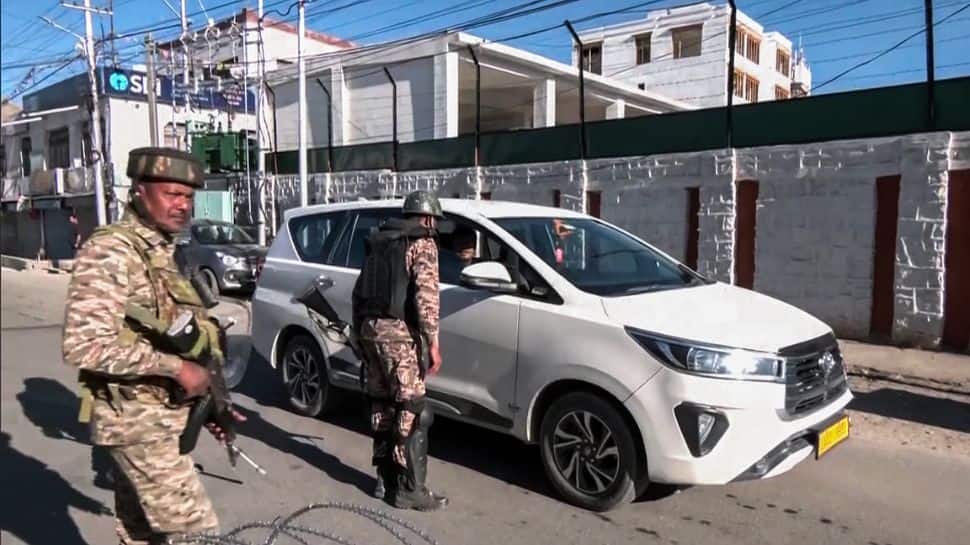
The Ministry of Home Affairs (MHA) has ordered a judicial probe into the violence that occurred in Leh on September 24, 2025, which resulted in four deaths and around 90 injuries. The investigation, led by former Supreme Court Justice B.S. Chauhan, was announced on October 17, 2025.
The violence broke out during protests demanding statehood for Ladakh and inclusion under the Sixth Schedule of the Indian Constitution. The demonstrations, which had been peaceful for weeks, escalated into clashes between protesters and security forces.
The judicial inquiry will investigate the circumstances that led to the violence, the police action taken, and the subsequent deaths of the four individuals.
The new judicial probe supersedes a previous magisterial inquiry ordered by the local Ladakh administration on October 2, 2025. Protester groups, including the Leh Apex Body (LAB) and the Kargil Democratic Alliance (KDA), had rejected the magisterial inquiry, insisting on a more impartial judicial investigation led by a retired judge.
The Leh Apex Body (LAB) welcomed the Ministry of Home Affairs’ decision to order a judicial probe into the Leh violence. The announcement directly addressed one of LAB’s primary preconditions for resuming talks with the central government, which had been suspended after the incident.
Climate activist Sonam Wangchuk, who was detained under the National Security Act (NSA), had also demanded an independent judicial inquiry. Wangchuk, who was on a hunger strike for the cause, was arrested on September 26 under the NSA for allegedly inciting the violence. From jail, he has maintained that the government pushed the youth toward violence by ignoring peaceful protests and has vowed to remain imprisoned until an independent judicial inquiry is conducted.
Following the clashes, a curfew was imposed in Leh, and mobile internet services were suspended for weeks. Both restrictions have since been lifted, and life is gradually returning to normal.
Protesters are demanding that the Union Territory of Ladakh be made a full-fledged state. When the region was carved out of Jammu and Kashmir in 2019, it was granted Union Territory status without a legislative assembly.
They are also seeking Ladakh’s inclusion under the Sixth Schedule of the Constitution. This status provides autonomous powers to tribal-majority regions, enabling them to control local governance, land, resources, and culture through elected councils. With over 97 per cent of Ladakh’s population belonging to Scheduled Tribes, this status is seen as crucial for preserving their distinct identity and fragile ecosystem.
Activists are further demanding the establishment of a dedicated Public Service Commission for Ladakh and the allocation of two parliamentary seats, one for the Leh district and one for Kargil.