

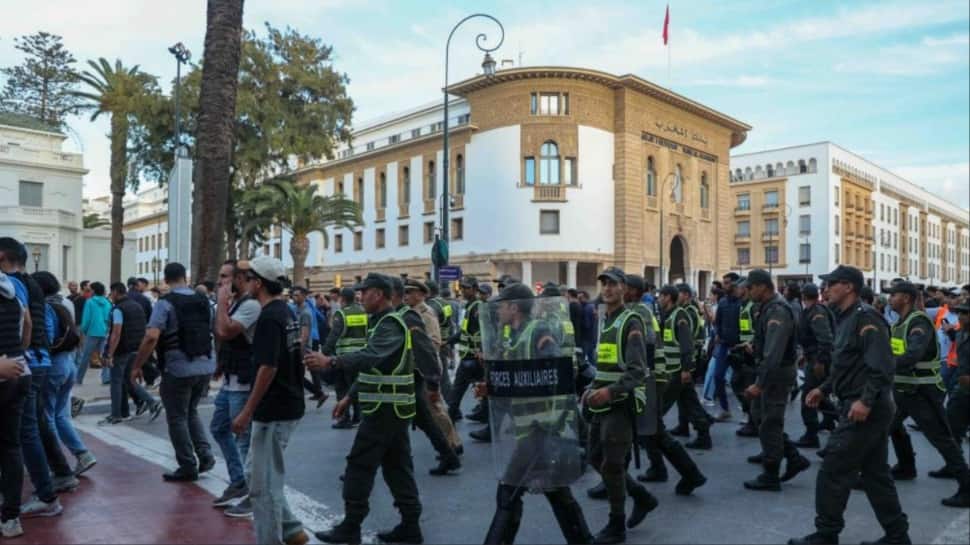
More than 400 people have been arrested and close to 300 injured amid ongoing protests across Morocco, as demonstrators call for urgent reforms in the country’s public health and education systems, the Interior Ministry has confirmed.
Now into their fifth consecutive day as of Wednesday (local time), the demonstrations have drawn large crowds in several cities, despite lacking official authorisation.
The protests have been spearheaded by GenZ 212, a newly formed online collective that operates primarily through Discord, according to local media outlets.
Participants have sharply criticised the Moroccan government for prioritising preparations for the 2030 FIFA World Cup, arguing that billions are being spent while essential sectors like healthcare and education remain underfunded and poorly maintained.
Interior Ministry spokesperson Rachid El Khalfi stated that violence erupted in cities including Oujda and Inzegane, where demonstrators clashed with police.
He reported that protesters resorted to throwing stones, Molotov cocktails, and even using knives during confrontations with security forces.
El Khalfi confirmed that 409 individuals had been detained in connection with the unrest.
He also reported that 263 police officers were injured, along with 23 protesters, one of whom required hospitalisation in Oujda.
Significant property damage was also recorded, with over 140 police vehicles and 20 private cars set on fire during the clashes.
Footage circulating on social media platforms showed masked individuals pelting police with stones, setting rubbish bins ablaze, and igniting areas near a shopping centre.
On Tuesday, prosecutors announced that 37 people, including three currently in custody, would face trial over their alleged involvement in the disturbances. Their legal representative, Souad Brahma, confirmed the charges filed against them.
In a statement released after the escalation, GenZ 212 expressed “regret” over the violent incidents on Tuesday. The group described itself as a “discussion space” focused on pressing public issues such as education, healthcare, and the fight against corruption.
(With inputs from IANS)