

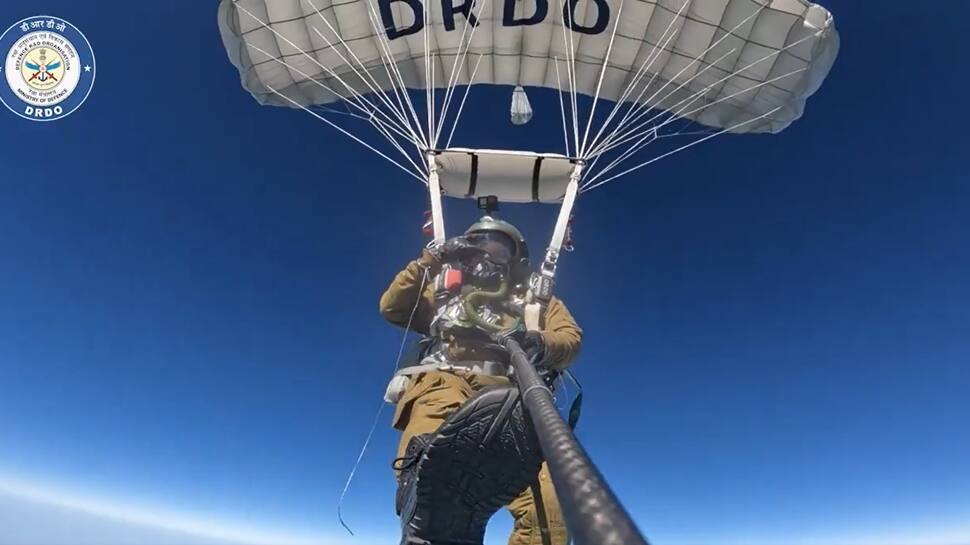
The Defence Research and Development Organisation’s (DRDO) successful test of the Military Combat Parachute System (MCPS) from 32,000 feet marks a significant leap in India’s airborne operational capability. The system—now the only one in service capable of being deployed above 25,000 feet—offers multiple tactical and strategic advantages to Indian forces. Defence Minister Rajnath Singh congratulated DRDO, the Armed Forces and the Industry on the successful demonstration and described it as a significant milestone for India’s indigenous defence capability.
1. Enhanced High-Altitude Operations
The MCPS allows special operations forces to be deployed from extreme altitudes, even above mountainous terrain such as the Ladakh sector or Arunachal Pradesh, where traditional parachute systems are limited by altitude and oxygen constraints. This enables rapid insertion behind enemy lines and stealth entry in high-altitude regions.
2. Improved Stealth and Range
High-altitude jumps (up to 32,000 feet) permit High Altitude High Opening (HAHO) and High Altitude Low Opening (HALO) missions. In such operations, troops can glide long distances—dozens of kilometres—from the drop zone, avoiding radar detection and allowing discreet infiltration into hostile or sensitive areas.
3. Indigenous and Cost-Effective Design
Being fully indigenously developed, the MCPS reduces dependence on foreign parachute systems, cutting costs and ensuring easier maintenance and upgrades. It aligns with the ‘Aatmanirbhar Bharat’ (self-reliant India) initiative, promoting local defence manufacturing.
Achieving major milestone in critical defence technologies, Military Combat Parachute System (MCPS), indigenously developed by DRDO has successfully undergone a combat freefall jump from an altitude of 32,000 feet. The parachute system was deployed at an altitude of 30,000 ft,… pic.twitter.com/VPApxpYO3x
— DRDO (@DRDO_India) October 15, 2025
4. Improved Safety and Reliability
The system’s successful test validates its oxygen integration, automatic activation, and stabilised glide control, which are critical for safe operation at extreme altitudes where air pressure and temperature are challenging. These improvements will enhance mission success rates and troop survivability during combat or reconnaissance missions.
5. Boost for Special Forces and Airborne Units
Elite units such as the Para (Special Forces), Garud Commandos, and MARCOS can now conduct deep-penetration or rescue missions with greater flexibility and reach, particularly in high-altitude zones or during covert cross-border operations.
The MCPS gives India’s armed forces a strategic edge in mobility, stealth, and self-reliance. By mastering high-altitude parachute deployment, India not only strengthens its special operations capability but also showcases its growing technological maturity in indigenous defence systems.