

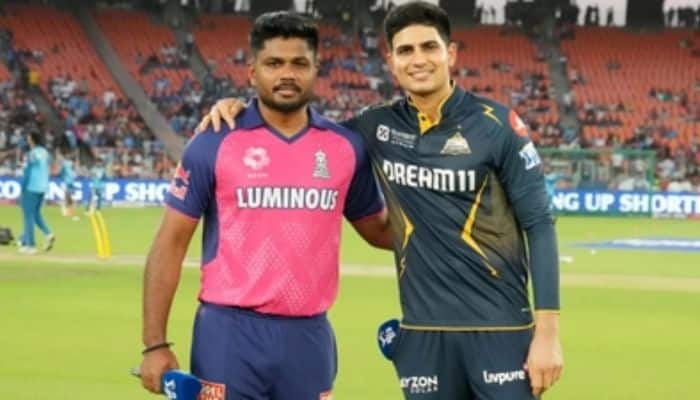
The announcement of India’s Asia Cup 2025 squad has reignited one of the most debated topics in Indian cricket: where does Sanju Samson fit in when Shubman Gill is available? With the BCCI reinstating Gill as T20 vice-captain, the selectors have sent a strong message about the team’s long-term vision, and Samson, once again, finds himself fighting for relevance in a star-studded batting line-up.
Gill’s Comeback: A Statement of Intent
The return of Shubman Gill as T20 vice-captain is not just about form; it is about succession planning. Twice in the last three IPL seasons, Gill has amassed more than 650 runs, striking above 140, proving himself as one of the most consistent performers in world cricket. His reinstatement signals the selectors’ desire to build around him as India’s next all-format leader.
Chairman of selectors Ajit Agarkar made it clear:
“Gill’s form in England exceeded expectations. He was vice-captain the last time he played T20Is. Now that he is available, he walks straight into the XI.”
That statement effectively locks Gill into the opening slot, leaving little breathing space for Samson.
Sanju Samson’s Dilemma: A Victim of Timing?
For Sanju Samson, the timing of Gill’s comeback couldn’t be worse. The Kerala batter has been in sublime form over the past year, scoring over 400 T20I runs since the 2024 World Cup at a blistering strike rate above 180. His partnerships with Abhishek Sharma at the top brought India flying starts, redefining aggression in the powerplay.
Yet, with Gill reclaiming his position and Abhishek’s left-handed utility (along with his handy bowling) making him undroppable, Samson’s opportunities have dried up. As Agarkar candidly admitted, Samson was playing because Gill and Jaiswal were unavailable. With the squad now full-strength, the wicketkeeper-batter is struggling to find a defined role.
Why Samson Doesn’t Fit the XI
The harsh reality is that Samson’s batting style is best suited to the top three positions. However, those spots are now occupied by Gill, Abhishek Sharma, and Suryakumar Yadav. At No. 4 or 5, Samson’s game loses impact, while Tilak Varma’s left-handedness and part-time off-spin provide India with balance and flexibility.
Former India opener Aakash Chopra summed it up:
“With Gill’s return, Samson’s fate is sealed. You won’t drop Tilak or Hardik Pandya. Jitesh Sharma will likely get the nod as keeper-finisher. Samson sits out.”
If that’s the case, Samson may once again be reduced to a backup wicketkeeper role, something that has frustrated fans who believe his talent deserves a permanent place.
Kerala’s Lone Star Under Pressure
For Kerala, a state with limited representation in Indian cricket, Sanju Samson is more than just a player – he is a symbol of hope. Every selection or omission triggers emotional debates about opportunity and fairness. This Asia Cup was seen as Samson’s chance to cement his place ahead of the T20 World Cup 2026, but instead, he is back in the waiting game.
The emotional weight of representing a smaller cricketing state makes Samson’s exclusion more than a tactical decision; it’s a story of aspirations hanging by a thread.
The Bigger Picture: Performance vs. Vision
The debate isn’t just about Samson. It reflects a larger question in Indian cricket: What defines selection? Is it raw numbers, team balance, or future planning? Samson’s strike rate, explosiveness, and wicketkeeping credentials tick all the performance boxes, yet India’s long-term strategy seems to prioritize leadership grooming and squad balance over individual brilliance.
With Rishabh Pant set to return as the first-choice keeper, Samson’s chances shrink further. Unless injuries or rotations open doors, he risks becoming the perennial backup despite his world-class potential.