

New Delhi: The year was 1950. The Himalayas stood as a frontier of uncertainty. China had undergone a communist revolution the previous year, and its new regime wasted no time in pushing outward. By 1950, Tibet had fallen under Beijing’s control. In Kathmandu, the royal palace watched the turbulence with unease. Nepal was trapped in political crisis. The Rana regime, which had ruled with absolute authority since 1846, was losing grip. The monarchy, still fragile, feared for the country’s survival.
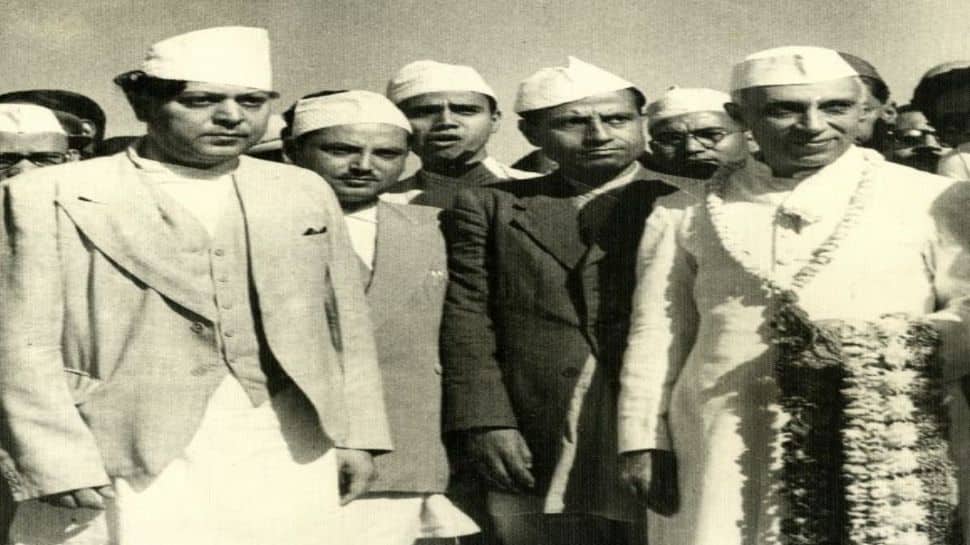
It was in this climate that then then King Tribhuvan Bir Bikram Shah reached out to India, seeking to secure Nepal’s future. According to accounts later cited by Pranab Mukherjee in his memoir ‘The Presidential Years’, the King suggested to then Prime Minister Jawaharlal Nehru that Nepal could be integrated into India as one of its provinces. The idea was extraordinary. If accepted, it would have redrawn the map of South Asia forever.
Nehru’s response was cautious and steeped in diplomacy. He believed Nepal should remain an independent nation. His vision was that the Himalayan nation would evolve into a constitutional monarchy with democratic governance, not lose its identity within a larger neighbour.
Writing in the book, Mukherjee described how Nehru approached the proposal. He explained that Nehru’s instincts always leaned toward allowing nations to find their own path, even if circumstances tempted him to act otherwise.
He contrasted Nehru’s stance with Indira Gandhi’s temperament. In such a moment, he observed, Indira would have acted differently. Her decision to merge Sikkim with India during the 1970s was cited as an example of her readiness to seize geopolitical opportunities. Had Indira Gandhi been in Nehru’s place, he wrote, she would likely have taken up King Tribhuvan’s offer.
The story carries echoes of the shifts that were then reshaping South Asia. Nepal was undergoing change after decades of Rana dominance. Tribhuvan himself returned from exile in 1951 and initiated a constitutional monarchy, formally opening the door to democracy. The proposal he had made to Nehru remains one of the least remembered episodes of that era.
Today, Nepal still wrestles with political instability. In the past two decades alone, governments have changed frequently. The Maoist uprising of 2006, which dismantled the monarchy, brought hopes of a more stable future, but the years since have been marked by turbulence. The resignation of Prime Minister K.P. Sharma Oli on September 9 was only the latest reminder of the fragile bond between Nepal’s leaders and its citizens.
Mukherjee’s account brings this forgotten history back into focus. It shows the anxieties of a monarch surrounded by upheaval, the restraint of a prime minister guided by principle and the sharp contrast in styles between two of India’s most important leaders. Above all, it leaves behind a haunting question: what if Jawaharlal Nehru had said yes?