

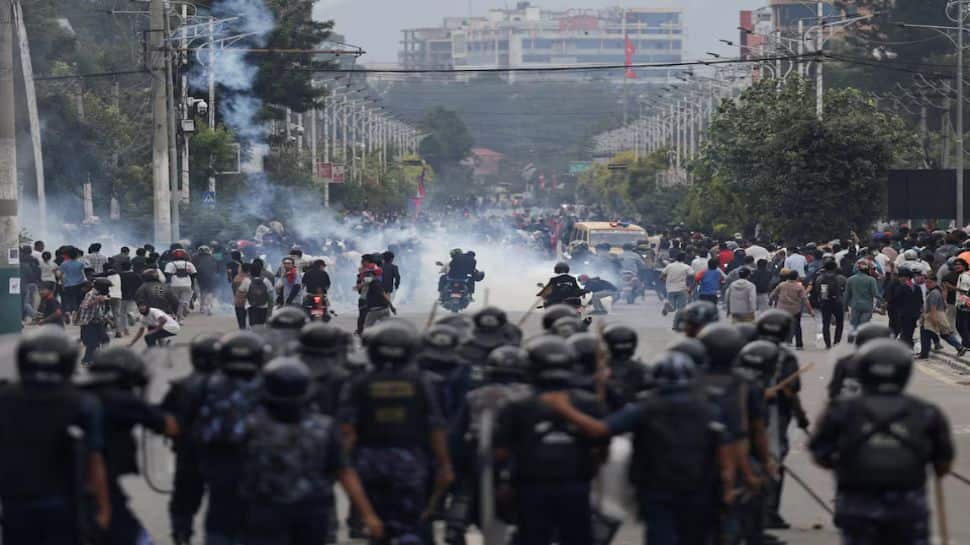
Kathmandu: After violent protests that killed 19 people and left dozens injured, Nepal’s government has lifted its sweeping social media ban. Home Minister Ramesh Lekhak resigned on Monday, citing moral responsibility for the deaths.
Prime Minister K.P. Sharma Oli confirmed the U-turn. “We will ensure conducive use of social media,” he said.
The ban had gone into effect on Friday, cutting off access to 26 platforms including Facebook, Instagram, YouTube, X, WhatsApp, Reddit, LinkedIn and Messenger. Only a handful of apps such as TikTok, Viber, Wetalk and Telegram remained available.
The shutdown followed a Supreme Court directive ordering all foreign and domestic platforms to register with the Ministry of Communications and Information Technology, appoint local officers and set up complaint systems for Nepali users. Non-compliance meant automatic deactivation.
The blackout quickly triggered mass demonstrations. Crowds surged into a restricted zone near parliament, with some scaling compound walls. Clashes with security forces erupted, leaving scores wounded.
Ranjana Nepal, an information officer at Civil Hospital, confirmed that the emergency ward was packed with injured protesters.
Authorities imposed curfews across central Kathmandu, including the parliament area, the presidential residence and Singha Durbar, the prime minister’s office complex.
The cabinet decided on Monday to restore access. Information and Communication Technology Minister Prithvi Subba Gurung said the decision was unanimous. “It has been decided to open the social networks as there is an agitation using this as an excuse,” he said.
The restrictions had alarmed rights groups. The Committee to Protect Journalists condemned the blackout as a direct strike on free expression, while Access Now warned of censorship without transparency.
The dispute traces back to petitions first filed in 2020, which challenged unregistered foreign platforms broadcasting ads and streaming content in Nepal. That case produced the Directive on Regulating the Use of Social Media, 2080, mandating registration and tighter oversight.
Parliament is now debating a separate social media bill that would introduce fines and possible jail terms for posts deemed against the “national interest”.
For ordinary Nepalis, the ban was felt immediately: frozen timelines, lost business access and families unable to reach relatives abroad. The crisis marked Nepal’s first nationwide blackout of major social platforms, one that ended only after bloodshed forced the government to back down.