

Washington: Signalling renewed pressure on India and other major importers, the United States has called on the European Union (EU) to join it in imposing stricter measures against countries buying oil from Russia.
US Treasury Secretary Scott Bessant on Sunday emphasised that additional sanctions by the EU against Russian oil buyers could cripple Russia’s economy.
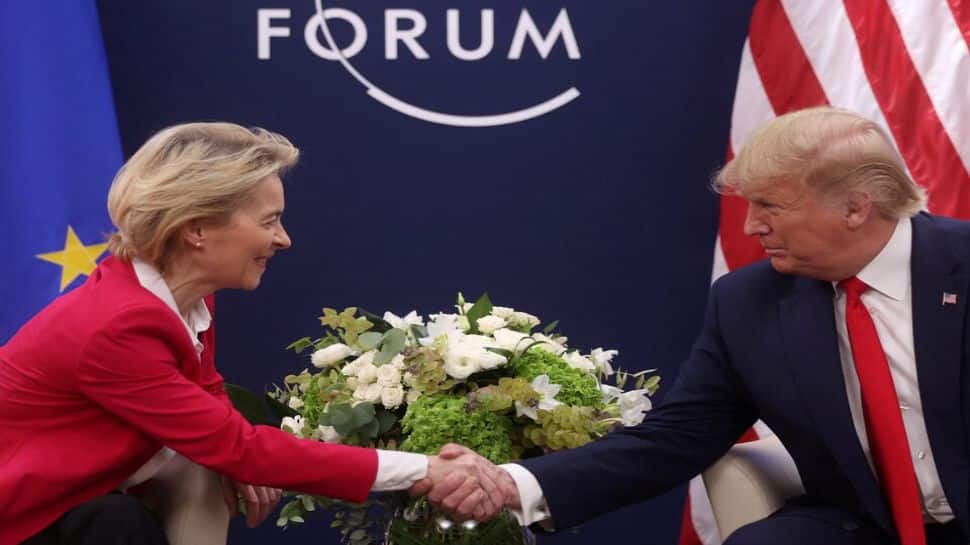
Speaking to NBC, he said President Donald Trump and Vice President J.D. Vance had stressed the importance of coordinated pressure against Russia during discussions with European Commission President Ursula von der Leyen.
India is a key country in this list. The United States has already imposed a total 50 percent tariff on Indian imports linked to Russian oil. Bessant’s remarks suggest Washington may attempt to raise this pressure further.
“The race is between how long the Ukrainian forces can hold and how long Russia’s economy can sustain itself. If the United States and the EU act together, stricter sanctions can be applied to countries buying oil from Russia. Additional tariffs can be imposed. This could completely devastate Russia’s economy and force President Putin to come to the negotiating table with President Trump,” he said.
Last week, European Council President Antonio Costa announced that the EU would send a delegation to Washington to discuss stricter measures against Russia. He said the EU was coordinating with the United States and other partners on a unified sanctions approach.
Trump has repeatedly criticised India’s purchases of Russian oil. He has imposed 50 percent tariff on Indian imports, describing it as significant, while asserting that he maintains very good personal relations with Prime Minister Narendra Modi.
From the Treasury and Commerce departments to trade advisors, US officials have consistently singled out India. India has defended its Russian oil imports, calling them necessary for national interests. The country also points out that EU nations remain the top buyers of LNG from Russia, and China purchases more Russian oil than India still faces no comparable tariffs.
Former US diplomat and Treasury adviser Evan Feigenbaum criticised Bessant’s call, describing it as inconsistent. He reposted Bessant’s remarks on X, stating that two EU members continue buying Russian oil and gas, making immediate enforcement unlikely.
Questions remain over India’s trust in the Trump administration. Despite praising Modi as a friend, the US president’s statements and actions signal continued economic pressure. Following Modi’s visit to the SCO Summit in Tianjin and meetings with Chinese President Xi Jinping and Russian President Vladimir Putin, he posted a photograph of the three leaders, warning that India and Russia could fall under China’s influence.
In a state TV interview, Russian Foreign Minister Sergey Lavrov stressed that China, India and Russia cooperate based on mutual interests, though agreement is not universal across all issues.
US Commerce Secretary Howard Lutnick told Bloomberg that India may come to the negotiating table within one to two months to discuss compromises with the Trump administration. Despite repeated pressure, the US president insisted that US-India relations are special and that Modi remains a friend.
Analysts see limited room for dramatic improvement in ties. Parmeet Pal Choudhary, head of India practice at Eurasia Group, said, “I do not expect dramatic improvements. Trump will continue to use every tool to ensure his negotiating position prevails.”
Finance Minister Nirmala Sitharaman reaffirmed India’s stance, telling News18 that the country will continue purchasing Russian oil and will pursue energy deals that serve national interests.
Meanwhile, the EU has already imposed sanctions on India. In July, the EU restricted operations of Vadinar Refinery, owned by Nayara Energy in Gujarat, as part of broader sanctions targeting the Russian energy sector.
Bloomberg reported that Russia’s Rosneft had planned to sell its stake in Nayara Energy, but EU restrictions could block that deal.
The combined US and EU measures could place India in a difficult position, balancing energy security and trade relations with Western partners amid the ongoing conflict in Ukraine.