

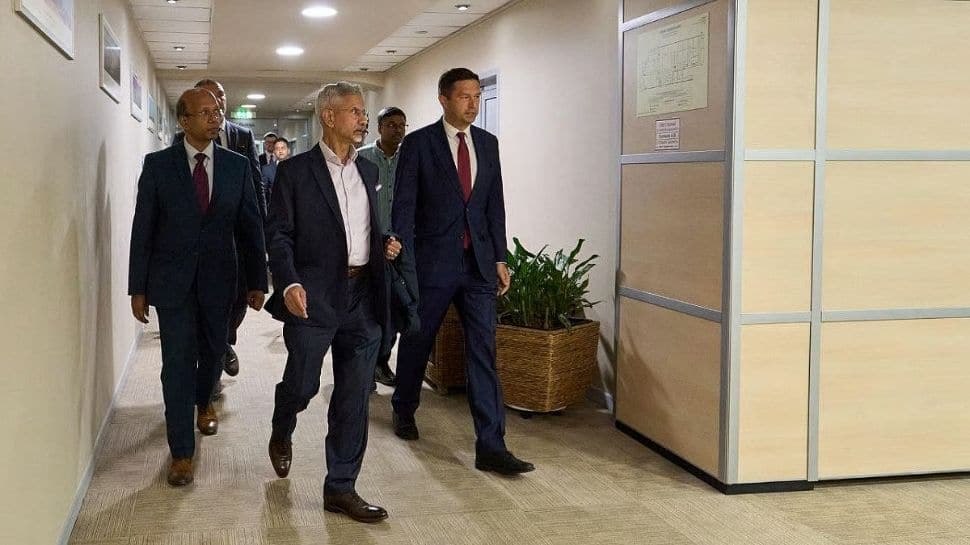
New Delhi: India’s oil trade with Russia has been in the global spotlight. But External Affairs Minister S Jaishankar, during his Russia visit on Thursday, made it clear that New Delhi is not the biggest buyer of Moscow’s energy. He reminded critics that China and the European Union purchase far more Russian oil and gas.
“We are not the biggest purchasers of Russian oil, that is China. We are not the biggest purchasers of LNG, that is the European Union. We are not the country, which has the biggest trade surge with Russia after 2022; I think there are some countries to the South,” Jaishankar said at a press briefing in Moscow.
The minister recalled how Washington once encouraged India to keep buying Russian oil to stabilise global markets. “We are a country where the Americans have said for the last few years that we should do everything to stabilise the world energy market, including buying oil from Russia. Incidentally, we also buy oil from the United States, and that amount has increased. So honestly, we are very perplexed at the logic of the argument that you had referred to,” he added.
His remarks came just days after White House Press Secretary Karoline Leavitt said that President Donald Trump had imposed tariffs on India to deter Moscow from pursuing the Ukraine conflict. Trump has now raised India’s tariff rate to 50 per cent, doubling the duty by adding a fresh 25 per cent levy to an earlier round of 25 per cent.
In Moscow, Jaishankar held detailed talks with Russian Foreign Minister Sergey Lavrov. He said the meeting was an opportunity to take stock of both political ties and wider bilateral cooperation. Terrorism was also high on the agenda. “It is India’s sovereign right to defend against terrorism. We condemn terrorism in every form. We resolve to fight terrorism jointly,” Jaishankar said.
The minister co-chaired a meeting of the key bilateral body that manages trade and economic relations between the two nations. He highlighted that India and Russia have maintained “one of the steadiest major relationships in the world after the Second World War”.
Trade issues figured prominently in the discussions. Jaishankar pressed for a more balanced structure in bilateral commerce. “This requires swiftly addressing non-tariff barriers and regulatory impediments, enhancing India’s exports to Russia in sectors like agriculture, pharma and textiles. It will certainly help correct the imbalance,” he said.
Regional and global developments also came up in his talks with Lavrov. The two sides exchanged views on Ukraine, West Asia, the Middle East and Afghanistan. Jaishankar highlighted that India continues to view dialogue and diplomacy as the most practical route to resolve conflicts.