

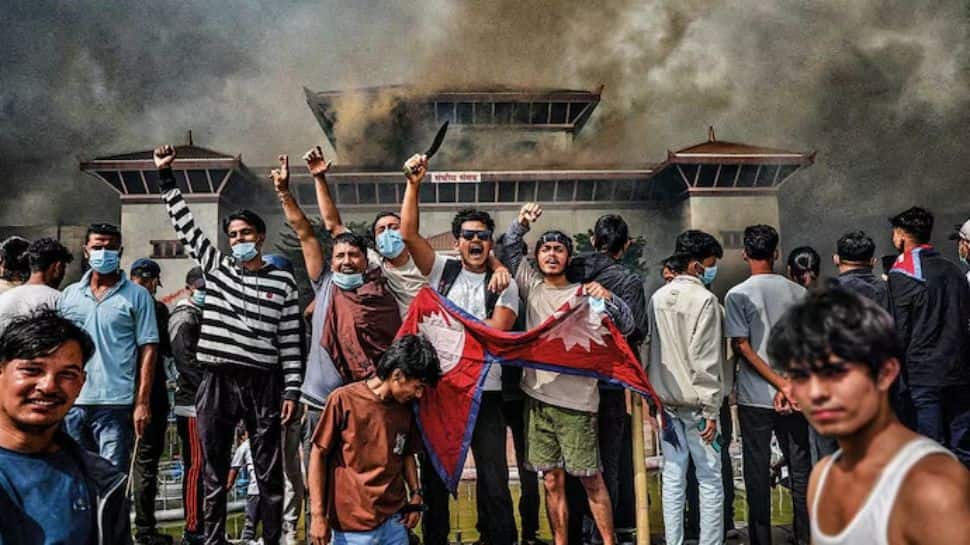
New Delhi: The sound of gates breaking apart carried across Kathmandu’s streets as young crowds (Gen-Z) surged forward. Barricades that had stood as symbols of control crumbled in minutes. The marchers poured into the prime minister’s residence. Once guarded from the public, the hallways echoed with muddy footsteps. Windows shattered, furniture overturned and luxury sheets pulled from beds.
That house had long stood as a fortress of the powerful. For a brief time, it belonged to the people.
This scene played out in Nepal. Two years ego, Sri Lanka had witnessed similar sights. A year earlier, the same story unfolded in Bangladesh. Three countries and three youth-led uprisings. Different sparks, but a common fire.
A New Political Playbook
Analysts observed that these protests reflect a shift in South Asia. Governments have fallen not through coups or party defections, but through anger mobilised by a young generation.
Paul Staniland, a political scientist at the University of Chicago, highlighted that this represented “a new politics of instability”.
He described it as a departure from the region’s earlier patterns of conflict.
In Nepal, thousands of young people logged into Discord, a platform built for gamers, to vote in an online poll for an interim prime minister. This came after three days of violent demonstrations against corruption and nepotism. More than 70 people were killed. The crackdown only deepened fury. Prime Minister KP Sharma Oli, who had mocked protesters for being too young, had to step down.
In Bangladesh, discontent had erupted over job quotas. Student campaigns demanded an end to discrimination. Police crackdowns left hundreds dead. By August 2024, frustration converged into a demand for Prime Minister Sheikh Hasina’s resignation. She fled Dhaka by helicopter.
Known as Aragalaya or the Struggle Sri Lanka’s, movement grew out of a collapsed economy. Long power cuts, shortages of food and fuel and runaway inflation brought thousands to Colombo’s streets. Protesters camped outside the presidential secretariat, turning the site into a hub of rallies and performances. By July 2022, President Gotabaya Rajapaksa fled the country.
Roots Of The Anger
Human rights advocates said the uprisings had shared foundations. Meenakshi Ganguly of Human Rights Watch pointed to corruption and inequality. She explained that young South Asians had grown up during two global recessions and two years of pandemic isolation.
At the same time, they were ruled by leaders from an older generation. Oli was 73, Hasina 76 and Rajapaksa 74. She said the “dissonance was too high” between rulers and the lives of young citizens.
That gap, activists said, fuelled rage. The rise of slogans like #NepoKid in Nepal highlighted resentment over privilege. Protesters argued that children of politicians lived in comfort abroad while their peers struggled for jobs at home.
Digital Savvy And Street Strength
Columbia University’s Rumela Sen said that beneath the images of burning buildings and broken gates, there was a sincere demand for accountability and justice.
Sen highlighted that Gen-Z had mastered digital tools. Social media campaigns and online communities allowed them to organise quickly. Governments that blocked the internet found such tactics backfired.
She said protesters in Nepal had declared they could no longer ignore the lavish lifestyles of political families, lifestyles they believed were built on the ruin of their own futures.
According to her, this generational anger gave the protests moral force.
Shared Lessons Across Borders
Researchers in Kathmandu said Nepali activists were not operating in isolation. Jeevan Sharma, a political anthropologist, observed that youth leaders had closely followed movements in Sri Lanka and Bangladesh. He argued that the protests formed part of a wider regional pattern of disillusionment.
Staniland echoed the point, saying movements across South Asia appeared to be learning from one another. Tactics, slogans and strategies have spread across borders.
Sen also emphasised that decentralised organising and hashtag campaigns represented a new playbook of protest. From GotaGoGama in Colombo to #NepoKid in Kathmandu, each uprising seemed to adapt lessons from the last.
A Region On Edge
Nearly half the population in these countries is under 28. Literacy is high, but income remains low. Jobs are scarce. Analysts said this demographic reality made the uprisings possible. The demands were not about secession or separatism. They were about economic fairness, opportunities and dignity.
Governments now face a dilemma. Suppression risks further unrest. Engagement risks their own loss of control.
The gates of power have already fallen once in Colombo, Dhaka and Kathmandu. The question is where the next sound of breaking metal will echo.