

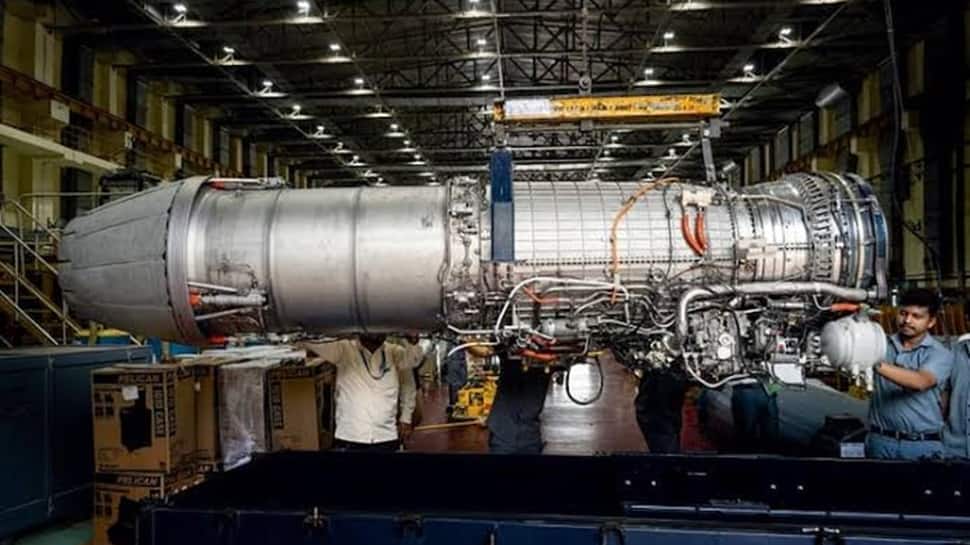
Tejas Project Delayed? For years, Washington has attempted to influence New Delhi’s strategic choices — from defense procurements to energy imports. After sustained U.S. pressure on India’s purchase of discounted Russian oil, reports now suggest that engine deliveries for India’s Tejas fighter jets are facing hurdles from American aerospace giant General Electric (GE). The development has triggered unease in India’s defense establishment, particularly as the Indian Air Force (IAF) has phased out its ageing MiG-21 fleet.
Tejas Deliveries Facing Bottlenecks
The Light Combat Aircraft (LCA) Tejas Mk-1A program, a cornerstone of India’s push for indigenous defense capability, is struggling to maintain production schedules. Hindustan Aeronautics Limited (HAL) has rolled out 10 aircraft so far, but the supply of GE’s F-404 engines has not kept pace.
GE had initially committed to providing two engines by August this year. However, only two units have arrived — one in March and another in July — after a prolonged year-long delay. Though GE has assured that 3–5 more engines could be delivered by October, Indian officials remain cautious.
Also Read: Boost To IAF’s Combat Strength: Govt Signs Rs 62,370 Crore Deal For 97 Tejas Fighter Jet With HAL
The engines are crucial to fulfilling the ?45,000 crore contract signed in 2021 for 83 Tejas Mk-1A jets. Yet, GE has managed to supply only three of the 99 ordered F404-GE-IN20 engines. Projections now indicate that just seven more may arrive by December, with about 20 expected in 2026, and bulk deliveries beginning only by 2027.
India Prepares A $1 Billion Engine Order
Despite the slowdown, India is pushing ahead with larger commitments. Negotiations with GE are in the final stages for a $1 billion deal to procure 113 new F-404 engines. These will power the expanded Tejas fleet after the Cabinet approved an additional order of 97 aircraft this month. HAL and GE are expected to ink the agreement within weeks.
Meanwhile, discussions are also underway for the more advanced F-414 engines, which will be the backbone of India’s next-generation platforms — the Tejas Mk-2 and the stealth-oriented Advanced Medium Combat Aircraft (AMCA). An Indian delegation is expected to travel to the U.S. later this year to push forward negotiations, with hopes of concluding the deal by 2026.
Air Force’s Push For Indigenous Engines
Senior IAF officials acknowledge the urgency of reducing dependency on foreign suppliers. Air Marshal Awadhesh Kumar Bharti recently confirmed ongoing collaboration with GE for AMCA engines, but also highlighted India’s long-term vision of indigenous powerplants.
“Our aim is to have an indigenous fighter jet engine within the next 10–12 years. It requires consistent effort from both the defense industry and research organizations, but it is achievable,” Bharti said.
He also stressed that while future projects like the Tejas Mk-2 and AMCA will define India’s aerospace capability, immediate priorities remain: filling operational gaps left by the MiG-21’s retirement.
Time To Look Beyond The US?
The delays raise a critical strategic question: should India diversify its sources for fighter jet engines? France’s Safran, which already supports India’s Rafale program, has expressed willingness to collaborate on co-development of advanced engines. Russia too, despite its current challenges, has historically been a reliable defense partner, powering much of India’s existing fleet.
Defense analysts caution that over-reliance on a single foreign supplier can expose India to geopolitical risks. The engine delays underscore the importance of hedging bets — by deepening cooperation with trusted partners while accelerating indigenous R&D.
Time To End External Dependence
The Tejas program is not just about adding numbers to the IAF’s fleet — it is symbolic of India’s quest for defense self-reliance. However, the current bottlenecks with GE’s engine supplies highlight the vulnerabilities of external dependence. While negotiations with the US are ongoing, India would be wise to keep strategic options open with France, Russia, and its own domestic industry. A balanced approach could ensure that India’s skies remain secure — without being hostage to foreign arm-twisting.